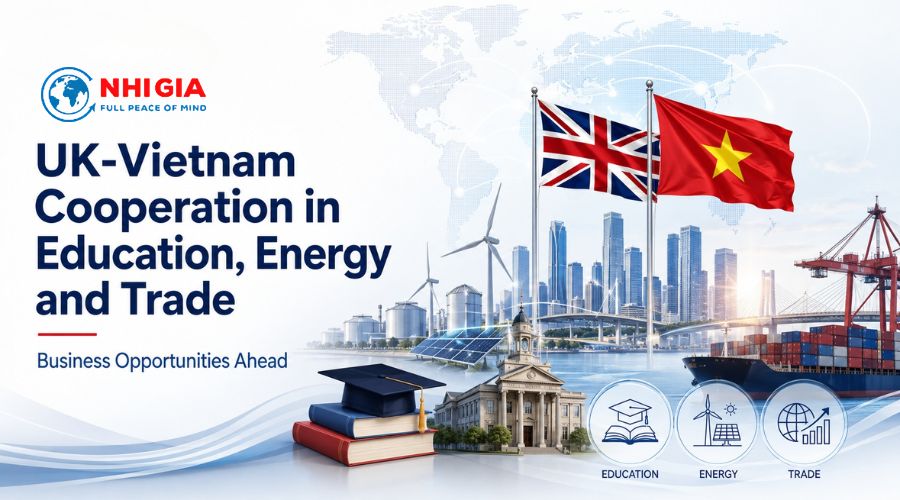
UK-Vietnam economic relations are entering a more active phase, with cooperation expanding beyond traditional trade into education, energy, finance, investment and business partnerships. As Vietnam continues to deepen its international integration and move up the value chain, diplomatic and commercial engagements between the two countries are creating new opportunities for companies, institutions and investors on both sides.
On 12 June, UK Trade Envoy Matt Western MP concluded a working visit to Vietnam with a programme focused on education, trade and energy. His engagements included attending the signing ceremony and launch of Cranleigh School Vietnam, meeting EVN Chairman and CEO Dang Hoang An to discuss UK-Vietnam cooperation in the energy sector alongside representatives from UK Export Finance, and hosting a UK-Vietnam business reception with more than 60 business leaders from both countries.
These activities reflect a broader shift in the UK-Vietnam relationship. The two countries are no longer looking only at goods trade, but also at long-term cooperation in high-value sectors such as international education, clean energy, green finance, skills development, infrastructure, technology and professional services.
For businesses, this creates not only commercial opportunities, but also a growing need for international mobility, cross-border documentation and proper immigration compliance. When companies cooperate across borders, they need people to travel, work, stay, sign documents, attend meetings, transfer knowledge and manage projects on the ground.
UK-Vietnam cooperation is moving into high-value sectors
The UK and Vietnam have built a growing economic relationship through trade, investment, education and development cooperation. In 2025, the two countries elevated bilateral ties to a Comprehensive Strategic Partnership, with economic cooperation, trade, investment, finance, education, energy and green transition among the key areas of collaboration.
This upgraded relationship provides a stronger foundation for businesses in both countries to explore new sectors. Education is one of the clearest examples. The launch of Cranleigh School Vietnam reflects the continued growth of transnational education cooperation between the UK and Vietnam. As Vietnamese families and institutions seek access to international education standards, British schools, universities and education providers may find new opportunities in Vietnam.
Energy is another important area. Vietnam’s growing electricity demand, energy transition goals and infrastructure needs create room for cooperation in renewable energy, grid development, project finance, engineering, consulting and technical services. The involvement of UK Export Finance in discussions around energy cooperation shows that financial support and project structuring may play an important role in future UK-Vietnam energy partnerships.
Trade and business networking also remain central. A business reception gathering more than 60 leaders from both countries shows that commercial partnerships still depend heavily on direct engagement. Even in a digital economy, many business relationships need face-to-face meetings, site visits, project discussions and follow-up visits before they can move forward.

Bilateral trade creates more demand for business travel
As UK-Vietnam trade and investment ties grow, the movement of businesspeople, experts and managers between the two countries also increases. Vietnamese companies may need to travel to the UK to meet partners, attend trade fairs, explore education cooperation, discuss energy projects, negotiate contracts or seek investment opportunities. British companies may need to send representatives, consultants, teachers, engineers or project managers to Vietnam to support local operations.
This is especially relevant in sectors that require trust, technical review or long-term partnership. Education cooperation may involve school leaders, curriculum specialists, teachers and academic managers. Energy cooperation may require engineers, project finance experts, technical consultants and equipment specialists. Trade partnerships may involve directors, sales teams, legal representatives and supply chain managers.
In practice, business cooperation rarely happens through email alone. Companies often need multiple rounds of direct engagement: initial meetings, due diligence, site inspections, contract discussions, implementation planning, training, project supervision and post-launch support.
This is why international business mobility is becoming an important part of UK-Vietnam cooperation. Companies need to plan not only the commercial side of a partnership, but also the documents that allow people to travel, work and stay legally in the destination country.
Education cooperation increases demand for foreign teachers and academic experts
The development of UK-Vietnam transnational education cooperation may create stronger demand for foreign teachers, academic managers, curriculum specialists and education consultants in Vietnam. British education providers entering or expanding in Vietnam may need to send staff to support programme design, teacher training, school operations, quality assurance and academic management.
For Vietnamese schools, training centres and education groups, working with international partners can also mean recruiting or inviting foreign professionals to teach, advise, train local staff or implement international standards.
When foreign teachers or academic experts come to Vietnam for short meetings, workshops or project visits, the immigration requirements may be different from those for long-term employment. However, when a foreign teacher or expert works in Vietnam for a longer period, the host institution usually needs to review the appropriate visa, work permit, work permit exemption confirmation if applicable, and temporary residence card.
Professional documents are also important in education. Degrees, teaching certificates, criminal record checks, experience letters and appointment documents issued overseas may need consular legalization and certified translation before being used in Vietnam. If these steps are not prepared early, the onboarding timeline for foreign teachers or academic experts may be delayed.
For education institutions, this means immigration and documentation planning should begin during the recruitment or partnership stage, not after the foreign professional has already arrived in Vietnam.

Energy cooperation may bring more technical experts to Vietnam
Energy projects often involve complex technical, financial and regulatory requirements. When UK and Vietnamese partners explore cooperation in energy, particularly in renewable energy, grid infrastructure, project finance or technical consulting, foreign specialists may need to enter Vietnam to support different stages of a project.
At the early stage, foreign experts may be involved in feasibility studies, technical assessments, financing structure, risk analysis and environmental review. During implementation, companies may need engineers, equipment specialists, EPC consultants, safety experts, project managers and commissioning teams. After a project becomes operational, foreign specialists may continue to support training, maintenance, performance optimisation and technology transfer.
For companies operating in the energy sector, the key issue is not only whether an expert can enter Vietnam, but whether the expert has the right legal basis to work and stay for the required period. If the expert directly works in Vietnam, the company should review work permit requirements or work permit exemption options under the applicable regulations on foreign workers in Vietnam.
For long-term assignments, a temporary residence card may also be relevant. This allows foreign experts to stay in Vietnam more stably, instead of relying only on short-term visa extensions. In addition, technical qualifications, experience letters, appointment decisions and documents issued overseas may need consular legalization and certified translation before being submitted in Vietnam.
In energy projects, timing matters. If a technical expert cannot enter or work on schedule, project milestones such as installation, testing, commissioning or training may be affected.

Business receptions and trade missions create demand for outbound business visas
The UK-Vietnam business reception hosted during the Trade Envoy’s visit also highlights another important point: business development depends on people meeting people. When companies want to expand into a new market, they often need to attend receptions, trade missions, industry conferences, roadshows, trade fairs and buyer meetings.
For Vietnamese companies exploring the UK market, business travel may involve meeting potential partners, visiting institutions, attending education or energy events, negotiating contracts or discussing investment opportunities. These trips may require a UK business visa or another suitable visa category depending on the purpose and duration of the visit.
A strong business visa application should clearly show the purpose of travel, the applicant’s role in the company, the planned itinerary, invitation letters, meeting schedules, company documents and evidence of business ties. If the trip is part of a delegation, the documents should be consistent across the delegation while still reflecting each person’s role.
For companies, preparing business travel documents too late can affect meeting schedules, event participation and commercial opportunities. This is why outbound business mobility should be planned together with the company’s market-entry or partnership strategy.
Cross-border documents are becoming more important
As UK-Vietnam cooperation expands, companies on both sides may need to use official documents across borders. These may include invitation letters, contracts, memoranda of understanding, powers of attorney, company registration documents, appointment letters, academic degrees, professional certificates, criminal record checks, financial documents, project documents or technical records.
When a UK-issued document needs to be used in Vietnam, or a Vietnam-issued document needs to be used in the UK, companies should check whether consular legalization, certification, notarisation or certified translation is required. The requirement depends on the type of document, the purpose of use and the authority or partner receiving it.
In education, cross-border documents may include degrees, teaching certificates, school partnership documents, curriculum records or quality assurance materials. In energy, they may include technical qualifications, project contracts, appointment letters, authorisation documents and expert profiles. In trade, they may include company documents, contracts, catalogues, price quotations, business correspondence and meeting records.
Well-prepared documents help companies avoid delays, inconsistencies and unnecessary back-and-forth with partners or authorities. In international business, paperwork is not glamorous, obviously, because apparently humanity invented global trade and then buried it under documents. But it is still one of the things that keeps cooperation moving.
What should companies prepare when working with UK or Vietnamese partners?
Companies should first define the nature of the cooperation: education, energy, trade, investment, training, consulting, project implementation or commercial distribution. Each type of cooperation may create different immigration and documentation needs.
If a Vietnamese company sends employees to the UK, it should prepare the appropriate visa documents, invitation letters, meeting schedules, company profile, evidence of business purpose and travel plan. If the trip is for an event, trade fair or business reception, the company should keep event details and registration confirmation ready.
If a British company or expert sends personnel to Vietnam, the Vietnamese host should review the purpose of entry, expected duration of stay, work activities, sponsoring entity, work permit requirements, temporary residence needs and supporting documents. If the foreign expert will work in Vietnam, the company should not treat the visit as a simple business trip without checking the proper legal basis.
If official documents will be used across borders, companies should check early whether consular legalization, certified translation or notarised copies are needed. This step should be handled before the document is required for submission, not at the last minute when the project timeline is already under pressure.
For business delegations, companies should also coordinate travel planning, including flights, accommodation, meeting schedules and document consistency. This helps reduce delays and keeps the business visit aligned with the actual commercial purpose.

How Nhi Gia supports companies in UK-Vietnam business cooperation
As UK-Vietnam cooperation continues to expand in education, energy, trade and investment, companies will need more than commercial introductions. They also need well-prepared documents, compliant immigration planning and reliable support for cross-border business mobility.
Nhi Gia supports companies, institutions and foreign professionals with documentation and mobility services related to international business cooperation. These services may include Vietnam visa support for foreigners, work permits, work permit exemption confirmation, temporary residence cards, consular legalization, certified translation, outbound business visa support and corporate air ticketing.
For companies working with UK partners or welcoming UK experts to Vietnam, Nhi Gia can assist in reviewing document requirements, preparing supporting files and coordinating suitable solutions based on each specific case. This helps businesses stay more proactive when arranging meetings, receiving foreign experts, sending delegations abroad or implementing education, energy and trade partnerships.
Frequently asked questions about UK-Vietnam business cooperation and documentation
Why does UK-Vietnam cooperation create more demand for international documentation?
As companies cooperate across education, energy, trade and investment, they often need business travel, foreign experts, contracts, invitation letters, legal documents, professional certificates and cross-border paperwork. These documents may require visas, work permits, temporary residence cards, certified translation or consular legalization depending on the case.
What should a Vietnamese company prepare for a business trip to the UK?
A Vietnamese company should prepare the appropriate visa application, invitation letter, meeting schedule, company profile, evidence of business purpose, personal documents of the traveller and travel arrangements. If the trip is linked to an event or trade mission, event registration and agenda details should also be included.
Do UK experts working in Vietnam need a work permit?
If a UK expert directly works in Vietnam, the host company or institution should review whether a work permit or work permit exemption confirmation is required. The answer depends on the role, duration, working arrangement and applicable regulations.
Do foreign teachers or academic experts in Vietnam need legalized documents?
Degrees, teaching certificates, criminal record checks, experience letters or appointment documents issued overseas may need consular legalization and certified translation before being used in Vietnam, depending on the specific file and authority requirements.
When is a temporary residence card relevant for foreign experts in Vietnam?
A temporary residence card may be relevant when a foreign expert, teacher, manager or technical specialist works or stays in Vietnam for a longer period and meets the conditions under the appropriate residence category.
Sources: UK in Vietnam; Ministry of Industry and Trade of Vietnam; UK Export Finance; Government News; updates on UK-Vietnam trade, education and energy cooperation in 2026.