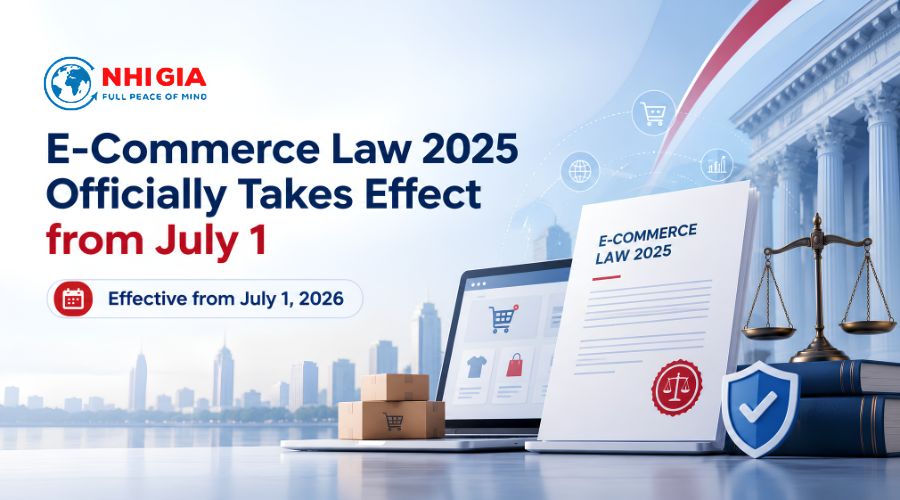
Effective from July 1, 2026, the E-Commerce Law 2025 officially comes into force, marking a significant milestone in the completion of Vietnam’s legal framework governing e-commerce activities. As the digital economy continues to expand rapidly, the new law is expected to foster a more transparent and competitive digital marketplace while promoting digital transformation and enhancing the effectiveness of state management over online business activities.
Strengthening the Legal Framework for E-Commerce
Passed by the National Assembly on December 10, 2025, the E-Commerce Law 2025 provides a comprehensive legal framework governing e-commerce activities in Vietnam. The law covers policies for e-commerce development; regulations on e-commerce platforms and the responsibilities of organizations and individuals participating in e-commerce; cross-border e-commerce activities; the responsibilities of e-commerce support service providers; and additional provisions on the application of technology in regulatory management and enforcement.
The enactment of the law is considered a timely response to the rapid expansion of e-commerce in both scale and business models. Persistent challenges such as counterfeit goods, intellectual property infringement, lack of transparency, and disputes arising from online transactions have highlighted the need for a more comprehensive and unified legal framework. The new law is expected to create a transparent business environment, safeguard the legitimate rights and interests of all parties involved, and improve the effectiveness of state management in the e-commerce sector.
Expanding the Scope of Application to Digital Market Participants
The E-Commerce Law 2025 applies to both domestic and foreign organizations and individuals engaged in e-commerce activities in Vietnam. Beyond online businesses, the law also covers e-commerce marketplaces, platform operators, e-commerce support service providers, and other relevant stakeholders, all of whom are required to fulfill their legal obligations under the new regulations.
The expanded scope reflects a more comprehensive regulatory approach to e-commerce, particularly as cross-border transactions and digital business models continue to grow. It also provides a foundation for fostering fair competition, enhancing market transparency, and strengthening trust among businesses and consumers participating in digital transactions.
Toward a Transparent Digital Marketplace and Accelerated Digital Transformation
Beyond strengthening the legal framework for e-commerce, the E-Commerce Law 2025 aims to promote innovation and digital transformation across business and production activities. It serves as a key foundation for building a transparent, competitive, and sustainable digital marketplace aligned with the ongoing development of Vietnam’s digital economy.
One of the law’s key objectives is to establish a stable and transparent legal environment that enables organizations and individuals to confidently engage in e-commerce within a well-defined regulatory framework. Clearly defining the rights, obligations, and responsibilities of market participants not only enhances the effectiveness of state management but also strengthens consumer protection, reduces commercial fraud, and builds greater trust in online transactions.
In addition, the law encourages the adoption of technology in regulatory oversight and enforcement, improving the monitoring and management of e-commerce activities. This serves as an important foundation for creating a more transparent digital marketplace while enabling businesses to develop new business models, expand market opportunities, and enhance their competitiveness amid the ongoing wave of digital transformation.
Businesses Need To Proactively Update Their Compliance Practices
The implementation of the E-Commerce Law 2025 not only introduces new compliance requirements but also encourages businesses to review and improve their digital business operations. Staying up to date with the latest regulations will help businesses minimize legal risks, enhance operational transparency, and build stronger trust with customers and business partners.
For businesses operating online or managing e-commerce platforms, standardizing transaction procedures, providing complete and accurate information as required by law, and strengthening consumer protection will become essential aspects of sustainable business development. Beyond meeting legal obligations, these measures will also improve service quality, enhance brand credibility, and create stronger competitive advantages in the marketplace.
As e-commerce continues to grow rapidly, regulatory compliance is increasingly becoming a key indicator of business professionalism. Early preparation and proactive adaptation will enable businesses to respond effectively to regulatory changes while maximizing the opportunities created by digital transformation and the expanding digital economy.
Conclusion
The official implementation of the E-Commerce Law 2025 on July 1, 2026, represents a major milestone in strengthening Vietnam’s legal framework for e-commerce. By promoting a transparent, secure, and sustainable digital marketplace, the law not only enhances regulatory effectiveness but also creates favorable conditions for businesses to innovate, improve competitiveness, and achieve long-term growth. Proactively understanding and complying with the new regulations will be essential for businesses seeking to adapt successfully to the evolving digital business environment and capitalize on the opportunities offered by the digital economy.
Reference sources: Luật Thương mại điện tử