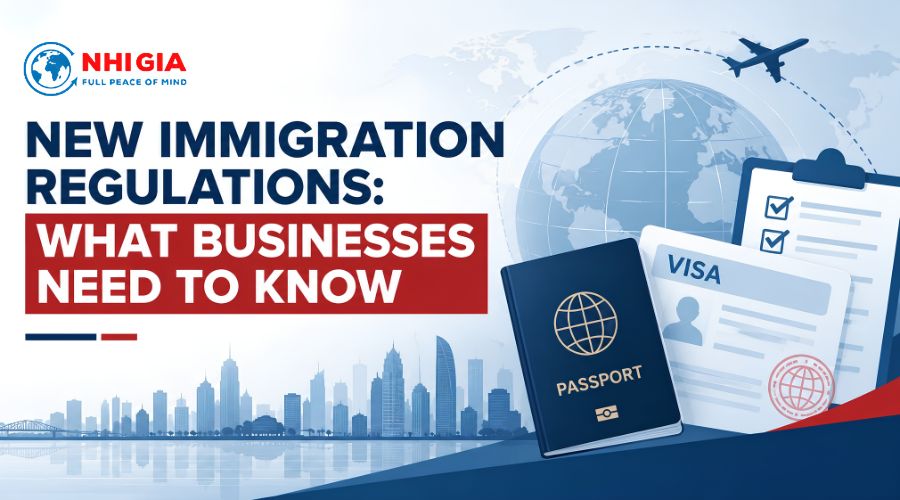
Law No. 118/2025/QH15, passed by the National Assembly on 10 December 2025, officially took effect on 1 July 2026. The Law amends and supplements various regulations concerning the entry, exit, transit, and residence of foreign nationals in Vietnam, with the aim of reducing paperwork, increasing the use of electronic data, and facilitating administrative procedures. For businesses that recruit, employ, or sponsor foreign workers, experts, and investors, these changes may directly affect the preparation of visa applications, temporary residence card applications, and other residence-related procedures.
1. Information already available in government databases does not need to be resubmitted
One of the notable changes is the addition of Article 6a on the use and retrieval of information from national and specialised databases.
Accordingly, documents or information already available in the relevant systems and accessible to the receiving authority will not need to be resubmitted when administrative procedures are carried out.
This provision may help businesses:
- Reduce the number of documents required.
- Avoid duplicate submissions of the same information.
- Shorten the time required to complete applications.
- Minimise the risk of inconsistencies between different submissions.
Businesses should note that the exemption from resubmitting documents only applies when the relevant data already exists and can be accessed and used by the authority processing the application. Businesses should therefore remain prepared to provide supplementary documents where data has not yet been synchronised or cannot be verified through the system.
2. Further digitalisation of Visa and E-Visa procedures
The Law amends regulations relating to the issuance of visas, electronic visas, and the reissuance of permanent residence cards. The amendments are intended to reduce application requirements, increase the use of electronic data, and enable more procedures to be completed online.
These changes may help businesses save time and costs when sponsoring foreign nationals to enter Vietnam. However, electronic applications must still contain accurate and consistent information across passports, work permits, corporate documents, and other relevant records.
Businesses should carefully verify:
- The foreign national’s full name and passport details.
- Job title, position, and purpose of entry.
- The validity periods of the passport, visa, and work permit.
- The legal information of the sponsoring company.
- Consistency between electronic records and original documents.
3. Introduction of UĐ1 and UĐ2 visas
The Law introduces two new visa codes:
- UĐ1: Issued to foreign nationals who are highly qualified personnel in the digital technology industry and to other individuals eligible for preferential policies under applicable regulations.
- UĐ2: Issued to the spouse and children under 18 years of age of a UĐ1 visa holder.
These new provisions provide an additional legal basis for Vietnam to attract highly qualified professionals and skilled personnel, while also facilitating the entry and residence of their accompanying family members.
Businesses operating in the digital technology sector should review the applicable eligibility requirements, documents proving professional qualifications, and relevant implementation guidance before applying for these visa categories.
4. Additional categories eligible for visa exemption
The Law introduces time-limited visa exemptions for foreign nationals belonging to special groups that require preferential treatment to support socio-economic development, while ensuring national defence, national security, public order, and social safety.
This provision establishes a legal basis for policies aimed at attracting investment, science and technology, innovation, and highly qualified human resources. The specific eligible groups, conditions, and exemption periods will be determined in accordance with Government regulations.
Businesses should not independently assume that a foreign national automatically qualifies for visa exemption. The applicable regulations and implementation guidance must be carefully reviewed for each individual case.
5. Adjustments to procedures relating to permanent residence cards
The Law further improves the regulations governing the issuance, replacement, and reissuance of permanent residence cards for foreign nationals.
The Minister of Public Security may determine cases in which foreign nationals are permitted to carry out procedures directly with the immigration authority for diplomatic, national defence, or security reasons. Procedures for the reissuance of permanent residence cards have also been simplified through reduced documentation requirements and increased use of electronic data.
Businesses employing or sponsoring foreign nationals who work, invest, or reside in Vietnam on a long-term basis should monitor the validity of their documents and initiate the necessary procedures before they expire.
6. Expanded eligibility for family-visit invitations and sponsorship
Vietnamese citizens permanently residing in Vietnam who are grandparents may invite and sponsor their foreign grandchildren to enter Vietnam for family visits.
This provision expands the scope of family sponsorship and better accommodates family reunification needs involving foreign nationals.
7. What should businesses prepare?
To minimise errors when carrying out procedures under the new regulations, businesses should:
- Review all documentation relating to sponsored foreign workers, experts, and investors.
- Maintain a tracking list for the expiry dates of passports, visas, work permits, and temporary residence cards.
- Standardise information across corporate records, employment documents, and foreign nationals’ personal data.
- Review the authority, account access, and internal procedures of personnel responsible for immigration applications.
- Monitor implementing regulations to determine the correct documentation and submission method for each procedure.
- Initiate procedures early rather than waiting until a visa, work permit, or temporary residence card has expired.
8. Proactive document review to minimise risks
Reducing paperwork and increasing the use of electronic data can make immigration procedures more convenient. However, these changes also require the information of businesses and foreign nationals to be accurate, complete, and consistent across all relevant systems.
Even a minor discrepancy in a person’s name, passport number, job title, purpose of entry, or employment period may result in a request for explanation, correction, or additional documentation.
Is your business sponsoring foreign experts, investors, or workers? Contact Nhi Gia for assistance in reviewing documentation, identifying the appropriate procedures, and preparing applications in accordance with the new regulations. An early review can help prevent disruptions to plans for entry, employment, and residence in Vietnam.
Reference source: Ho Chi Minh City Immigration Office.