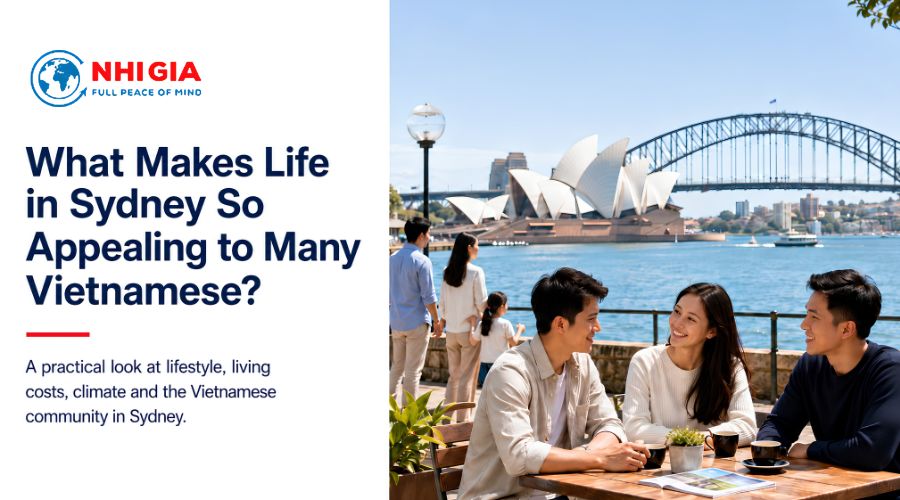
Sydney is not only known for the Opera House, the Harbour Bridge, or Bondi Beach. For many Vietnamese people, Sydney represents a very real dream: living in a modern, safe city with strong education, career opportunities, and a large Vietnamese community that makes life abroad feel a little closer to home.
But is life in Sydney truly as desirable as people imagine? Is the cost of living in Sydney high? Where do Vietnamese people usually live in Sydney? And what should you prepare if you plan to go to Sydney for study, work, family visits, or long-term settlement?
This article provides a practical overview of life in Sydney, covering climate, culture, education, employment, transport, living costs, and the Vietnamese community in the city.
Where is Sydney and why is it so attractive to Vietnamese people?
Sydney is the capital city of New South Wales, located on the southeastern coast of Australia. It is one of Australia’s largest, most vibrant, and most attractive cities, especially for those planning to study, work, visit family, or settle in Australia.
When people think of Sydney, they often think of:
- Sydney Opera House;
- Sydney Harbour Bridge;
- Bondi Beach;
- Sydney Harbour;
- World-class universities;
- A diverse immigrant community;
- Long-established Vietnamese areas such as Cabramatta, Bankstown, and Marrickville.
What makes Sydney special is its balance between international city life and a naturally beautiful living environment. Residents can work in a busy financial district during the week and spend the weekend by the beach, walking along the harbour, or visiting Asian markets for familiar flavors from home.
For many Vietnamese people, Sydney is more than a travel destination. It is also a city chosen for children’s education, family reunion, professional development, and long-term opportunities in Australia.
What makes life in Sydney stand out?
A modern city close to nature
Sydney is a well-developed city with modern transport, healthcare, education, and urban services. However, what many people love about Sydney is that it does not feel as overwhelming as some other major financial centers.
The city has beaches, harbours, parks, waterfront walking paths, and green residential areas. Places such as Bondi Beach, Manly Beach, Darling Harbour, Royal Botanic Garden, and Circular Quay help shape Sydney’s lifestyle: active and fast-paced, yet still balanced and refreshing.
For Vietnamese people who are used to a tropical climate, Sydney can also be easier to adapt to compared with cities that have extremely harsh winters.
Sydney’s climate is relatively pleasant
Sydney has a generally mild climate. Summers are warm, with some hot days, but usually not extremely severe for long periods. Winters are cool, with occasional rain and colder nights, but overall they are not too harsh.
Sydney’s seasons can be understood as follows:
- Spring: Pleasant weather, blooming flowers, ideal for walking, sightseeing, and outdoor activities.
- Summer: Sunny and warm, suitable for beaches, picnics, and outdoor experiences.
- Autumn: Cool, clear, and often considered one of the most comfortable seasons.
- Winter: Colder at night, but daytime often remains bright and manageable.
This pleasant climate is one of the reasons why life in Sydney is highly valued by many Vietnamese families, especially those with elderly family members, children, or international students arriving in Australia for the first time.
A multicultural environment that is easier for Vietnamese people to adapt to
Sydney is a multicultural city where people from many countries live, study, and work together. This helps newcomers feel more comfortable, as cultural differences are part of everyday life.
In Sydney, it is easy to find:
- Vietnamese, Chinese, Korean, Japanese, Thai, and Indian restaurants;
- Asian supermarkets;
- Schools and universities with many international students;
- Community cultural festivals;
- Support services for migrants;
- Neighborhoods with long-established Vietnamese communities.
For Vietnamese people newly arriving in Australia, having a community that shares the same language, familiar food, and daily-life services is a major advantage. This is also why many people choose Sydney over cities with smaller Asian communities.
Where do Vietnamese people live in Sydney?
One of the reasons Sydney is so familiar to Vietnamese people is its large and long-standing Vietnamese community.
Some of the most well-known Vietnamese areas in Sydney include:
Cabramatta
Cabramatta is often known as one of the main Vietnamese hubs in Sydney. The area is famous for Vietnamese restaurants, markets, bakeries, phở shops, money transfer services, Asian grocery stores, and a familiar Vietnamese atmosphere.
For many newcomers, Cabramatta helps reduce the feeling of being far from home because Vietnamese food, language, and community services are easy to find.
Bankstown
Bankstown is another area with a strong Vietnamese and Asian community. It offers many shops, food areas, daily-life services, and relatively convenient transport access.
Many Vietnamese families choose Bankstown because living costs may be more manageable than in some central areas, while everyday amenities remain accessible.
Marrickville
Marrickville has a Vietnamese community with a younger and more modern atmosphere. The area is known for cafés, restaurants, small shops, and a dynamic urban lifestyle.
It is suitable for young people, students, professionals, and those who want to live closer to the city while still maintaining a connection with Vietnamese culture.
Is the cost of living in Sydney high?
The short answer is: yes. Sydney is one of the more expensive cities in Australia, especially when it comes to housing.
However, the actual cost of living in Sydney depends greatly on where you live, the type of accommodation you choose, your eating habits, transport needs, and lifestyle.
Major living expenses to prepare for
When living in Sydney, you should plan for key expenses such as:
- Rent or student accommodation;
- Food and groceries;
- Public transport or private vehicle costs;
- Electricity, water, internet, and mobile phone bills;
- Health insurance;
- Tuition fees if studying;
- Personal expenses, entertainment, and shopping;
- Initial settlement costs after arrival.
Among these, housing is usually the largest expense. Living near the city center, universities, or popular residential areas is usually more expensive. Living farther from the center may reduce rent, but travel time can increase.
What should international students prepare financially?
For international students, tuition fees are only one part of the total cost. Students also need to budget for accommodation, food, transport, health insurance, study materials, and personal expenses.
Actual costs vary depending on the school, course, location, and personal spending habits.
Before choosing Sydney as a study destination, students should prepare a clear financial plan that covers not only tuition fees but also living costs throughout their study period.
A good financial plan helps students reduce pressure, avoid being passive after arrival, and focus better on studying, legal part-time work, networking, and adapting to life in Australia.
Is transport in Sydney convenient?
Sydney has a well-developed public transport system, including trains, metro, buses, ferries, and light rail. Residents can use an Opal card or contactless payment to travel across many public transport services.
For newcomers, public transport is usually the most common option because it is not necessary to buy a car immediately. However, if you live far from the city center or work in areas with fewer transport routes, commuting may take longer.
Some transport tips for Sydney include:
- Choose accommodation near your school, workplace, or a major train/bus route;
- Include transport costs in your monthly budget;
- Check public transport schedules carefully if you work evening shifts or weekends;
- If you plan to buy a car, consider insurance, fuel, registration, parking, and maintenance costs.
For international students and new migrants, choosing a location with convenient transport can save significant time and money.
Education in Sydney: Why many Vietnamese families choose this city
Sydney is one of Australia’s major education hubs. The city offers a wide range of universities, vocational training institutions, schools, and programs for international students.
Some well-known universities in Sydney include:
- The University of Sydney;
- University of New South Wales;
- University of Technology Sydney;
- Macquarie University;
- Western Sydney University.
For many Vietnamese families, Sydney is attractive because of its international learning environment, widely recognized qualifications, and career development opportunities after graduation. The large Vietnamese community also gives parents more peace of mind when their children study far from home.
However, studying in Sydney is not only about choosing a school. Students need to prepare their visa application, financial documents, health insurance, accommodation, study plan, and career direction carefully.
Career and employment opportunities in Sydney
Sydney is one of Australia’s major economic centers, with strong sectors such as finance, banking, technology, education, healthcare, professional services, tourism, trade, and logistics.
For people with professional skills, strong English ability, and relevant experience, Sydney can offer many career development opportunities. For international students, the city also provides legal part-time work opportunities in areas such as hospitality, retail, customer service, office support, and internships related to their field of study.
However, Sydney’s job market is competitive. Newcomers should prepare carefully in terms of:
- English proficiency;
- A resume/CV suitable for the Australian job market;
- Interview skills;
- Understanding of workplace rights;
- Adaptability in a multicultural working environment;
- A suitable visa plan aligned with study, work, or residence goals.
Sydney offers opportunities, but those opportunities are usually best accessed by people who prepare early, realistically, and thoroughly.
Safety, healthcare, and quality of life in Sydney
Sydney is widely regarded as a city with a high quality of life. Its healthcare, education, public transport, public services, and community safety systems are relatively well organized.
People living in Sydney can access various support services, including:
- Public and private healthcare services;
- Health insurance;
- Emergency services;
- Police and community safety services;
- International student support;
- Community services for migrants.
For Vietnamese people newly arriving in Sydney, it is important to understand both rights and responsibilities, especially regarding health insurance, visa conditions, work rights, stay duration, and immigration requirements.
Is life in Sydney truly worth dreaming about?
Sydney is a desirable city, but it is not a place without challenges.
Its appeal comes from its modern living environment, pleasant climate, multicultural community, strong education system, career opportunities, and large Vietnamese community. These factors make Sydney an ideal choice for many Vietnamese people who want to study, work, visit family, or settle in Australia.
However, Sydney also comes with real pressures:
- High living costs;
- Expensive rent;
- Competitive job market;
- Strong English and adaptation skills required;
- Visa, study, work, and settlement procedures that must be carefully prepared;
- A period of adjustment before life becomes stable.
Therefore, instead of asking only “Is Sydney a good place to live?”, the more important question is: Are you well prepared enough to live in Sydney?
Who is suitable for life in Sydney?
Sydney may be suitable for:
- International students seeking a global education environment;
- Professionals aiming to develop their careers in Australia;
- Families planning long-term education pathways for their children;
- People with relatives living in Australia;
- Investors, entrepreneurs, or specialists exploring opportunities in Australia;
- Applicants planning Australian migration and seeking a city with strong opportunities and community support.
However, if you are considering Sydney as a long-term destination, it is important to assess your finances, visa pathway, study or work goals, adaptability, and lawful residence plan carefully.
How Nhị Gia supports clients planning to go to Australia
Going to Sydney or any other Australian city does not begin only with a flight ticket. In many cases, the most important first step is identifying the correct entry purpose and preparing a suitable Australia visa application.
Nhị Gia supports clients with:
- Australia visa consultation based on travel purpose;
- Australia tourist visa;
- Australia family visit visa;
- Australia business visa;
- Australia student visa;
- Consultation for applicants with previous visa refusals;
- Guidance on preparing personal, financial, employment, invitation, and itinerary documents;
- Flight ticket consultation and travel-related procedures;
- Application review to help reduce errors before submission.
For urgent, express, or fast-track handling needs, Nhị Gia will review the application status, travel purpose, intended departure date, and document requirements to advise on a suitable option. The actual timeline depends on document completeness, additional requests if any, and the processing progress of the competent authority.
Nhị Gia has recorded a high approval rate for eligible applications that are fully, truthfully, and properly prepared in accordance with the entry purpose. However, visa results remain subject to the decision of the reviewing authority.
Contact Nhị Gia for Australia visa consultation
Sydney can be the beginning of a new journey: a memorable trip, an international study program, a career opportunity, or a family reunion plan.
If you are planning to travel to Sydney or other cities in Australia, it is important to prepare the right visa type, the right purpose, and a dossier that matches your actual situation from the beginning.
Please contact Nhị Gia for case-specific consultation:
- Hotline: 1900 6654
- Mobile hotline: 0906 736 788
- Email: info@nhigia.vn
- Address: 186–188 Nguyen Duy Street, Chanh Hung Ward, Ho Chi Minh City