Vietnamese Community in Australia Today
Australia is one of the countries many Vietnamese people choose for study, work, family reunion, business or long-term settlement. The Vietnamese community in Australia has developed over many years and is commonly found in major cities and areas with convenient education, employment, transport and community services.
According to the Australian Bureau of Statistics’ country-of-birth population estimates, as at 30 June 2025, around 326,630 Vietnam-born people were living in Australia. Vietnam is among the top 10 countries of birth for Australia’s overseas-born population.
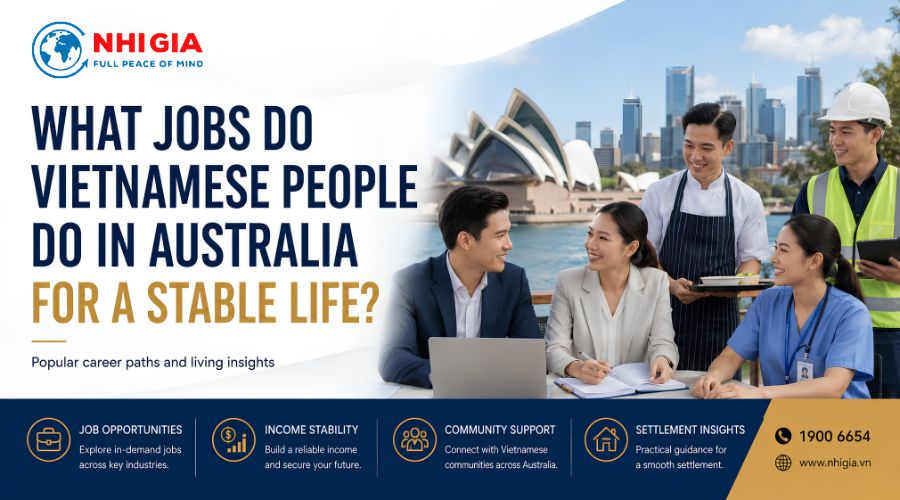
However, when looking at what Vietnamese people do for work in Australia, clients should not focus only on familiar jobs such as nail services, restaurants or retail. In reality, Vietnamese people in Australia work across many sectors, including services, healthcare, education, trades, construction and small business.
Where Do Vietnamese People Commonly Live in Australia?
The Vietnamese community in Australia is often associated with major states and cities such as New South Wales, Victoria, Queensland, as well as areas in Western Australia, South Australia and the Australian Capital Territory.
Well-known Vietnamese community areas include Cabramatta, Bankstown and Marrickville in Sydney; Footscray and Springvale in Melbourne; and certain areas in Brisbane, Perth and Adelaide. These places often have Vietnamese shops, restaurants, community services and cultural activities.
However, the size of Vietnamese communities by state or city may change over time. If exact figures are needed for reporting or dossier purposes, clients should refer to the latest ABS data instead of using figures with unclear dates.
Common Jobs Among Vietnamese People in Australia
Vietnamese people in Australia work in many different jobs depending on English ability, qualifications, experience, visa status, skills and long-term goals. Some start with entry-level jobs to stabilize their life, while others follow skilled trades, office roles, education, healthcare or small business pathways.
It is important not to assume that working in an occupation “in shortage” automatically guarantees employment or migration opportunities. Jobs and Skills Australia also notes that being listed as a shortage occupation does not necessarily mean securing a job is easier in every case, as this depends on specialization, location, experience and actual competition.
1. Nail and Beauty Services
Nail services are one of the familiar occupations among Vietnamese communities in Australia. This job is suitable for people with practical skills, customer service ability and interest in the service industry.
The advantage of nail work is that it can be learned relatively quickly, may be easier to enter than occupations requiring long formal qualifications, and can offer growth opportunities for those with strong skills, communication and customer understanding.
However, nail work also has challenges. Workers may face long hours, chemical exposure, high competition and the need to keep up with beauty trends. Those who want to open their own salon also need to understand business management, licensing, tax, leasing and employment regulations in Australia.
2. Restaurants, Hospitality and Food Services
Restaurants, hospitality and food services are common choices for many Vietnamese people, especially international students, newcomers or those needing flexible work.
Common roles include waiter/waitress, kitchen hand, chef, barista, cashier, shift supervisor or hotel staff. With a large Vietnamese community, Vietnamese restaurants in Australia also create job opportunities for people who speak Vietnamese and have experience in Vietnamese cuisine.
However, this sector often requires shift work, weekend work, peak-hour pressure and customer service skills. Workers should have basic communication ability, punctuality and an understanding of Australian employment rules to protect their rights.
3. Retail and Customer Service
Retail is an accessible job group for newcomers, especially in retail stores, supermarkets, shopping centers, convenience stores or customer service roles.
This type of work helps Vietnamese workers improve English, communicate with local customers and adapt to the Australian workplace. With good experience, retail staff may progress to roles such as shift supervisor, store manager, sales coordinator or professional customer support.
The main challenges are high competition, long standing hours, shift flexibility and customer-facing pressure. It may not be difficult to start, but long-term stability still requires professionalism and strong communication skills.
4. Office and Administrative Roles
Vietnamese people with good English, suitable qualifications or professional experience may work in office roles such as administration, accounting, human resources, marketing, assistant roles, customer support, operations coordination or basic data analysis.
These roles often provide more stable working environments, clearer working hours and long-term career development opportunities. However, they usually require stronger English, software skills, workplace culture adaptation and local experience.
For newcomers, a practical pathway may be to start with basic administration, customer support or operations support, then gradually upgrade skills and qualifications for more specialized roles.
5. Early Childhood Education and Childcare
Early childhood education and childcare are sectors many people consider in Australia due to strong social demand, relatively stable work settings and suitability for those who enjoy working with children.
However, this is not an “easy job” simply because someone likes children. Workers need suitable qualifications, teaching skills, communication ability, child protection knowledge and must meet background check, health or working-with-children requirements depending on the state or territory.
For those planning to study or work long-term in Australia, this sector may be worth considering, but training requirements, registration rules and visa conditions should be checked carefully before choosing this path.
6. Aged Care and Community Support
Aged care, disability support and community services are sectors with significant workforce needs in Australia. These fields suit people with patience, responsibility, communication ability and a genuine care mindset.
Work may include daily living support, facility-based care, home support, companionship for older people or community assistance. Some roles require certificates, background checks, safety training and care compliance.
This sector has strong social value, but it is not easy work. Workers need professional skills, physical stamina, emotional resilience and the ability to handle pressure.
7. Construction, Mechanics and Skilled Trades
Some Vietnamese people in Australia work in skilled trades such as construction, mechanics, electrical work, repairs, installation, maintenance, welding, fitting, carpentry or other technical roles.
Skilled trades may provide good income if workers have strong skills, suitable certification, workplace English and knowledge of Australian safety standards. For example, the Department of Home Affairs’ Core Skills Occupation List includes occupations such as Metal Fabricator, Pressure Welder, Welder (First Class), Fitter-Welder and other technical occupations.
However, an occupation appearing on an occupation list does not mean the applicant automatically qualifies for a visa or migration. Eligibility still depends on skills assessment, experience, English, employer sponsorship, points, state/territory requirements and the specific visa subclass.
8. Agriculture, Farm Work and Food Processing
Agriculture, farm work and food processing are chosen by some Vietnamese workers, especially in areas outside major cities. Work may include harvesting, packing, crop care, greenhouse work, food processing or related warehouse operations.
The advantage is that many roles do not require high formal qualifications and may suit those who want to start working quickly. However, the work can be physically demanding, seasonal and dependent on weather and local conditions. Workers should carefully check contracts, wages, hours, accommodation and entitlements before accepting a job.
9. Vietnamese Bread, Restaurants and Food Business
Vietnamese cuisine is familiar within the Vietnamese community in Australia. Many Vietnamese people work in bánh mì shops, phở restaurants, Vietnamese eateries, cafés or food businesses.
For those with cooking, kitchen management, service or small business experience, this can be a practical direction. The advantages include a large Vietnamese community, growing awareness of Vietnamese food among international customers and room for growth if the product, location, service and management are strong.
However, running a food business in Australia is not simple. Business owners need to understand food safety rules, leasing, staffing, tax, insurance, operating costs and service standards.
10. Small Business and Self-Employment
Many Vietnamese people in Australia choose self-employment after gaining local experience, understanding the market and accumulating enough capital. Common models may include nail salons, restaurants, cafés, grocery stores, community services, small trading or professional services.
Self-employment offers more control over income and business direction, but also comes with risks relating to capital, competition, legal compliance, tax, staffing and management. This path requires careful preparation and should not be chosen only based on success stories without understanding the operational realities.
Which Jobs Are More Stable for Vietnamese People in Australia?
There is no single job that is “stable and easy” for everyone. A suitable job in Australia depends on many factors:
- English ability;
- Qualifications and vocational certificates;
- Work experience;
- Visa status and work conditions;
- Location;
- Actual labor demand;
- Ability to adapt to Australian workplace culture;
- Long-term goals: working, further study, skilled visa, employer sponsorship or migration.
For newcomers, jobs in services, retail, restaurants, hospitality, customer support or community support may be more accessible. For long-term planning, sectors such as healthcare, education, trades, construction, technology, accounting, management or skilled occupations should be considered based on qualifications, skills and specific visa requirements.
What is notable about the Vietnamese community in Australia?
Vietnamese Markets and Neighborhoods
In major Australian cities, many Vietnamese community areas have developed with markets, restaurants, bánh mì shops, phở restaurants, Asian grocery stores, beauty services and community support services.
These areas help newcomers find familiar food, connect with the community and reduce the sense of unfamiliarity in the early stage. They also create job opportunities in retail, services, food and small business.
Vietnamese Festivals and Cultural Activities
The Vietnamese community in Australia maintains many cultural activities such as Lunar New Year events, community festivals, performances, religious activities, student associations and business networking events.
These activities help preserve Vietnamese culture and support better integration into Australian society, especially for younger generations born or raised in Australia.
Community Groups and Support Networks
Vietnamese people in Australia often connect through community groups, student associations, parent groups, professional groups, business associations or local organizations.
These networks can help newcomers find information about housing, jobs, study, documents, daily life and adaptation experience. However, for visa, legal or employment matters, clients should check official sources or professional advisory providers, rather than relying only on social media advice.
Why Do Vietnamese People Choose Australia for Study, Work and Life?
Vietnamese people choose Australia for different reasons. Some go to Australia to study, while others travel for family visits, family reunion, business, work or long-term development opportunities.
Common considerations include:
- Education quality;
- Safe and multicultural living environment;
- Work opportunities in certain sectors;
- A developed Vietnamese community;
- Study and skill development opportunities;
- Family reunion opportunities;
- Certain visa pathways suitable for specific cases.
However, Australia is not an “easy path” for everyone. Living costs, English requirements, visa conditions, job competition and professional standards must all be carefully considered before making a decision.
Which Jobs in Australia May Support Migration Pathways?
Some occupations in Australia may be linked to skilled visa or employer-sponsored pathways. However, no specific occupation can guarantee migration.
Migration opportunities depend on:
- Whether the occupation is on a relevant occupation list at the time of application;
- Whether the applicant has suitable qualifications and experience;
- Whether the applicant passes skills assessment;
- Whether English requirements are met;
- Whether the applicant has sufficient points for points-tested pathways;
- Whether there is state/territory nomination or employer sponsorship;
- Whether health, character and visa history requirements are met;
- Visa policy settings at the time of application.
The Australian Department of Home Affairs operates skilled, employer-sponsored and SkillSelect invitation mechanisms across different periods. Therefore, occupations and requirements should be checked with updated information before planning a dossier.
How Nhị Gia Supports Australian Visa Applications
If clients are researching what Vietnamese people do in Australia to plan for study, work, family visit, business or migration, the first important step is identifying the visa type that matches their purpose.
Nhị Gia supports consultation and preparation of Australian visa dossiers based on each specific case, including:
- Australia tourist visas;
- Australia family visit visas;
- Australia business visitor visas;
- Australia student visas;
- Sponsorship and family reunion dossiers;
- Skilled visa or long-term pathway-related dossiers depending on the case;
- Document review, translation, notarization and dossier preparation support.
With more than 20 years of experience in visa and international dossier support, Nhị Gia accompanies clients in reviewing purposes, assessing eligibility, preparing documents and tracking applications.
Nhị Gia Service Timeline
The Australian visa processing time published or guided by the Department of Home Affairs refers to the assessment time by the reviewing authority, not the entire actual timeline when clients use dossier support services.
When using Nhị Gia’s service, the actual timeline depends on visa type, dossier status, how quickly the client provides documents, translation/notarization needs, biometrics, health examination, additional requests if any and the reviewing authority’s processing progress.
Nhị Gia will advise the estimated timeline after reviewing the client’s specific dossier.
Contact Nhị Gia for Australian Visa Consultation
If you are planning to travel to Australia for tourism, family visit, study, business, work or long-term migration planning, you should check the correct visa type and dossier requirements before starting.
Please contact Hotline 1900 6654 or email info@nhigia.vn for case-specific Australian visa consultation from Nhị Gia’s specialists.