What Makes Life in Australia Different?
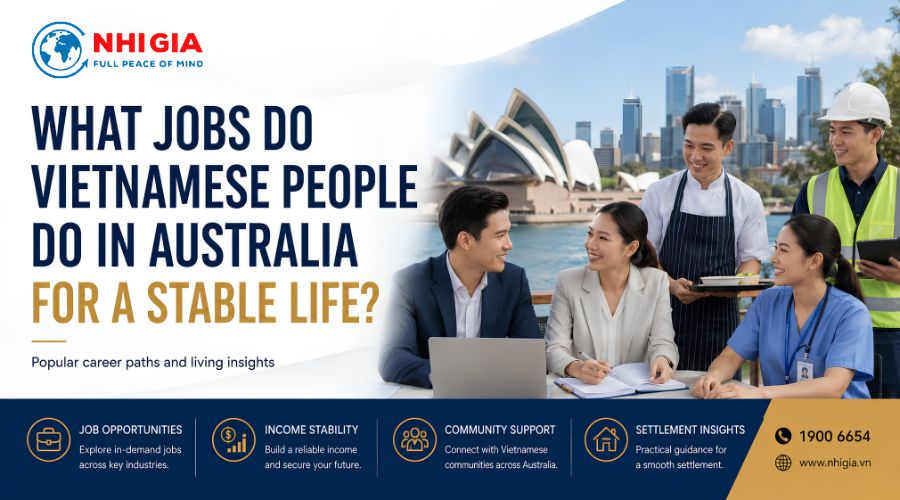
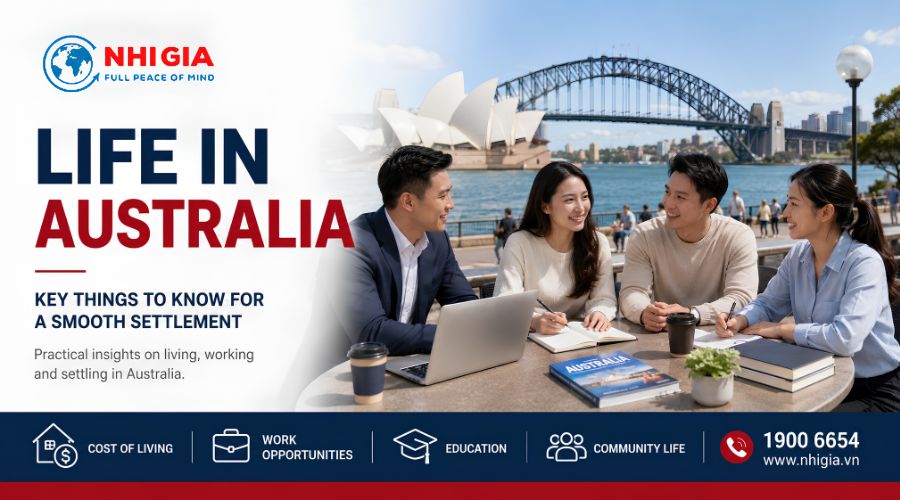
Australia is one of the countries many Vietnamese people consider for study, work, family reunion or long-term settlement. It has a developed economy, highly regarded education system, multicultural living environment and major cities such as Sydney, Melbourne, Brisbane, Perth, Adelaide and Canberra.
According to the Australian Bureau of Statistics, Australia’s population reached approximately 27,724,744 people as at 30 September 2025. As at 30 June 2025, Australia had around 8.8 million overseas-born residents, accounting for 32% of the population, showing its highly multicultural society. Vietnam is also among the common countries of birth for Australia’s overseas-born population.
However, life in Australia is not only about high living standards, clean environments and development opportunities. New arrivals also need to prepare for high living costs, labor market competition, English requirements, cultural differences and legal rules relating to visas, tax, healthcare, insurance and residence.
Overview of Australia
Australia is located in the Southern Hemisphere and includes the Australian mainland, Tasmania and many smaller islands. Its capital city is Canberra, while major population and economic centers include Sydney, Melbourne, Brisbane, Perth and Adelaide.
Australia is a parliamentary democracy with a stable legal system and developed economy. According to the Australian Department of Foreign Affairs and Trade, Australia is one of the most multicultural countries in the world, with a highly skilled workforce and a strong democratic tradition
Climate and Weather in Australia
1/ Southern and Southeastern Areas
Cities such as Melbourne, Sydney, Canberra, Adelaide and Tasmania generally have more temperate climates with clearer seasonal differences. Summers are usually warm or hot, while winters can be cold, especially in Canberra, Tasmania and higher-altitude areas.
2/ Northern Areas
Northern areas such as Darwin, North Queensland and tropical regions often have two main seasons: wet season and dry season. The wet season can bring heavy rain, high humidity and tropical storms in some areas.
3/ Inland Areas
Inland and central Australia have dry, hot climates with large temperature differences between day and night. New arrivals should prepare carefully for hydration, sun protection and transport when living or traveling in these areas.
Australian Time Zones Compared With Vietnam
Australia has multiple time zones, so the time difference with Vietnam depends on the state/territory and the time of year.
Generally:
| Area | Standard time zone | Compared with Vietnam |
| Western Australia | AWST | 1 hour ahead of Vietnam |
| South Australia, Northern Territory | ACST | 2.5 hours ahead of Vietnam |
| New South Wales, Victoria, Queensland, Tasmania, ACT | AEST | 3 hours ahead of Vietnam |
Some states and territories observe Daylight Saving Time during part of the year, usually from around October to April. During this period, some locations are one hour further ahead. However, not all of Australia observes daylight saving time, so newcomers should check based on their exact city.
Population and Population Density in Australia
Australia is a very large country with low population density. According to ABS, Australia’s population density in June 2025 was around 3.6 people per square kilometre. The population is concentrated in urban coastal areas, especially along the eastern and southeastern coasts, while many inland areas are sparsely populated.
This explains why life in Australia differs greatly between city centers, suburbs and regional areas. Those planning to settle or study in Australia should carefully consider where to live, as rent, employment opportunities, transport and community support can vary significantly by state, city and region.
Education in Australia
Australia is a popular study destination due to its diverse education system, international environment and programs ranging from school, vocational education, university to postgraduate study. Study Australia also notes that life in Australia offers international students a multicultural environment, high standard of living and access to student support services.
Highlights of Australian education include:
- Wide range of study programs and disciplines;
- Diverse universities, colleges, vocational and English language providers;
- International learning environment;
- Work rights under student visa conditions;
- Scholarships, grants and bursaries from the Australian Government, education providers and private organizations. Study Australia provides information on scholarships for international students.
However, international students should prepare finances, English ability, study goals and post-study plans carefully. Tuition fees, rent, insurance, transport and daily expenses all need to be calculated from the beginning.
Healthcare and Social Support in Australia
1/ Medicare
Medicare is Australia’s public healthcare system and helps cover many medical services. However, not all foreign nationals can access Medicare. Services Australia states that to enrol in Medicare as an Australian resident, a person generally needs to have a permanent resident visa or have applied for one under eligible conditions.
Temporary visa holders, international students and visitors usually need to check private health insurance requirements such as OSHC, OVHC or travel insurance, depending on visa type. It should not be assumed that everyone arriving in Australia receives the same healthcare coverage as citizens or permanent residents.
2/ Social Support
Australia has various social support programs, but many benefits such as unemployment support, family assistance, disability support or age pension depend on residence status, waiting periods and specific eligibility criteria. New arrivals on temporary visas should check conditions carefully before planning finances.
Income and Wages in Australia
Theo World Bank, GDP bình quân đầu người của Úc năm 2024 là khoảng 64,604 USD, nhưng chỉ số GDP/người không nên được hiểu là thu nhập thực nhận của từng cá nhân. Bài viết không nên ghi kiểu “60,000-140,000 AUD/người” nếu không có nguồn rõ, vì khoảng đó quá rộng và dễ gây hiểu nhầm.
Australia has relatively high income levels compared with many countries, but actual income depends on industry, position, experience, qualifications, location, English ability and visa status.
According to Fair Work, from 1 July 2025, the National Minimum Wage is AUD 24.95 per hour or AUD 948 per week before tax for employees not covered by an award or enterprise agreement. Many jobs in Australia are paid under an award or enterprise agreement, so actual pay may be higher, especially for weekends, public holidays, night shifts or overtime.
According to the World Bank, Australia’s GDP per capita in 2024 was around USD 64,604, but GDP per capita should not be understood as take-home income for each individual.
Tax in Australia
People living and working in Australia need to understand basic tax obligations, especially income tax and tax return requirements.
Key notes include:
- Workers in Australia usually need a Tax File Number, or TFN;
- Tax residency is not always the same as visa status;
- Australian tax residents and foreign residents are taxed differently;
- Workers may need to lodge an annual tax return if required;
- If a person worked in Australia and later left the country, they may still need to lodge a tax return after 30 June.
The Australian Taxation Office provides information on tax residency, resident tax rates, foreign resident tax rates and tax obligations for people working in Australia.
Cost of Living in Australia
Living costs in Australia are generally higher than in Vietnam, especially in major cities such as Sydney, Melbourne, Brisbane, Perth and Canberra. Major expenses usually include:
- Rent;
- Electricity, water, gas and internet;
- Food;
- Transport;
- Health insurance;
- Tuition fees if studying;
- Phone, personal and entertainment expenses;
- Extra costs for moving, household items, medical visits or interstate travel.
Study Australia provides a Cost of Living Calculator to help students and future arrivals estimate costs by city, accommodation type, transport and lifestyle. Cost figures should be checked at the actual time instead of using one fixed “standard price” table for all of Australia.
Why Do Many Vietnamese People Choose Life in Australia?
Vietnamese people choose Australia for different reasons depending on study, work, family reunion, investment or settlement goals.
Common reasons include:
- Strong education quality;
- Safe and multicultural living environment;
- Employment opportunities in certain skilled sectors;
- Developed Vietnamese community;
- Relatively comprehensive healthcare and public services;
- Spacious living environment in many areas;
- Geographical proximity to Asia compared with the U.S., Canada or Europe;
- Various study, work, family and skilled visa pathways.
The Australian Department of Home Affairs notes that Australia’s permanent Migration Program includes economic and family migration and is the main pathway to permanent residence, apart from humanitarian pathways. The Australian Government has also set the 2025-2026 permanent Migration Program at 185,000 places.
Challenges of Living in Australia
- High Living Costs: Rent, tuition, health insurance, food and transport can create financial pressure, especially for international students, newly arrived families or those without stable employment.
- English Language Barrier: English directly affects study, employment, communication with government agencies, healthcare, renting and social integration. Those planning to settle should invest seriously in English before arrival.
- Job Market Competition: Some sectors in Australia have strong labor demand, but this does not mean newcomers can easily find work immediately. Qualifications, experience, skills, English, networking and professional registration where applicable all affect job opportunities.
- Cultural and Lifestyle Differences: New arrivals need time to adapt to communication styles, workplace culture, legal rules, community life and the high level of independence in daily living.
Essential Information for Living Smoothly in Australia
Emergency Numbers
When in Australia, clients should remember the following numbers:
| Situation | Phone number |
| Police, fire, ambulance in emergencies | 000 |
| Non-emergency police assistance | 131 444 |
| SES assistance for storms, floods, fallen trees and natural disasters | 132 500 |
| Crime Stoppers | 1800 333 000 |
Triple Zero is the national emergency number for police, fire and ambulance. 131 444 is used for non-emergency police assistance.
Public Holidays in Australia
Australia has national public holidays and state/territory-specific holidays. Common holidays include:
- New Year’s Day;
- Australia Day, 26 January;
- Good Friday and Easter Monday;
- Anzac Day, 25 April;
- King’s Birthday, varying by state;
- Labour Day, varying by state;
- Christmas Day, 25 December;
- Boxing Day, 26 December.
Substitute holidays may apply if a public holiday falls on a weekend. Therefore, when booking appointments, lodging documents, arranging health checks or booking flights, clients should check the public holiday calendar for the specific state or territory.
Embassy of Vietnam in Australia
From 24 February 2026, the Embassy of Vietnam in Australia relocated to 47 Culgoa Circuit, O’Malley, ACT 2606, Australia. Its postal address remains P.O. Box 98, Mawson, ACT 2607.
| Item | Information |
| Address | 47 Culgoa Circuit, O’Malley, ACT 2606, Australia |
| Postal address | P.O. Box 98, Mawson, ACT 2607 |
| Telephone | (02) 6169 4916 |
| Direct telephone | (02) 6169 4915 or (02) 6169 4917 |
| Fax | (02) 6108 3034 |
| Citizen protection hotline | 0466 401 665 |
| vembassy@iinet.net.au | |
| Website | vietnamembassy.org.au |
Basic Driving Rules in Australia
People living in Australia should note basic driving rules:
- Drive on the left side of the road;
- Always carry a valid driver licence;
- Vehicle occupants must wear seatbelts;
- Children need appropriate child restraints based on age and size;
- Do not drive after drinking alcohol or using substances affecting driving ability;
- Do not use a handheld mobile phone while driving;
- Follow speed limits;
- Rules on foreign driver licences may differ by state or territory.
New arrivals should check the rules of their state or territory before driving, especially how long they can use a foreign licence and whether translation or conversion is required.
Public Transport in Australia
Public transport in Australia varies by city. Major cities may have buses, trains, ferries, trams or light rail depending on the area.
Examples include:
- Sydney uses the Opal system;
- Melbourne uses Myki;
- Brisbane and Queensland use Go Card or regional ticketing systems;
- Perth uses SmartRider;
- Adelaide uses MetroCARD.
Transport costs vary by city, distance, travel time, ticket type and state policy. Therefore, it is not appropriate to state fixed fares such as “bus 3 AUD” or “taxi 1 AUD/km” for all of Australia.
What Should You Prepare Before Settling or Living Long-Term in Australia?
- Choose the Correct Australian Visa: Each purpose of travel to Australia requires a different visa type: tourism, family visit, study, work, skilled migration, investment, partner sponsorship, parent sponsorship or permanent residence. Choosing the wrong visa may lead to refusal or may not fit long-term plans.
- Calculate Realistic Costs: Clients should estimate tuition, rent, bond, insurance, food, transport, initial household items, health checks, document translation and unexpected expenses. Those moving with family should also account for school fees, childcare and insurance for each family member.
- Prepare English and Integration Skills: English is not only for study or work; it is also needed for healthcare, renting, banking, paperwork, school communication and government services.
- Research Accommodation Before Arrival: Clients should check the living area, rent, distance to school/work, public transport, safety, Vietnamese community and nearby services.
- Understand Legal Rights and Obligations: People moving to Australia should understand visa conditions, work rights, tax obligations, health insurance, residence rules, traffic laws and workplace rights if employed.
How Nhị Gia Supports Australian Visa Applications
Life in Australia offers many opportunities, but preparation is needed from visa documents and finances to stay purpose and long-term planning. Depending on the case, clients may need a tourist visa, family visit visa, business visa, student visa, family sponsorship visa, skilled visa or another stay pathway.
With more than 20 years of experience in visa and international dossier support, Nhị Gia assists clients in preparing Australian visa applications based on each specific purpose.
Nhị Gia supports clients with:
- Advising on the suitable Australian visa type;
- Checking eligibility and dossier requirements case by case;
- Guiding preparation of personal, financial, employment, study or family relationship documents;
- Reviewing the dossier before submission;
- Supporting translation, notarization/certification if required;
- Tracking application progress and supporting additional requests if any;
- Advising on visa conditions, stay duration, work rights, insurance and related obligations;
- Maintaining confidentiality of clients’ personal information and dossiers.
Nhị Gia does not guarantee visa outcomes for every application, as the final decision belongs to the competent Australian authority. However, preparing the correct visa type, clear purpose, complete documents and consistent information from the beginning can help reduce errors and support a more proactive plan to move to Australia.
If you are planning to study, work, visit family, conduct business, reunite with family or settle in Australia, you should check the correct visa type and application requirements before starting.
Please contact Hotline 1900 6654 or email info@nhigia.vn for detailed support from Nhị Gia’s specialists.