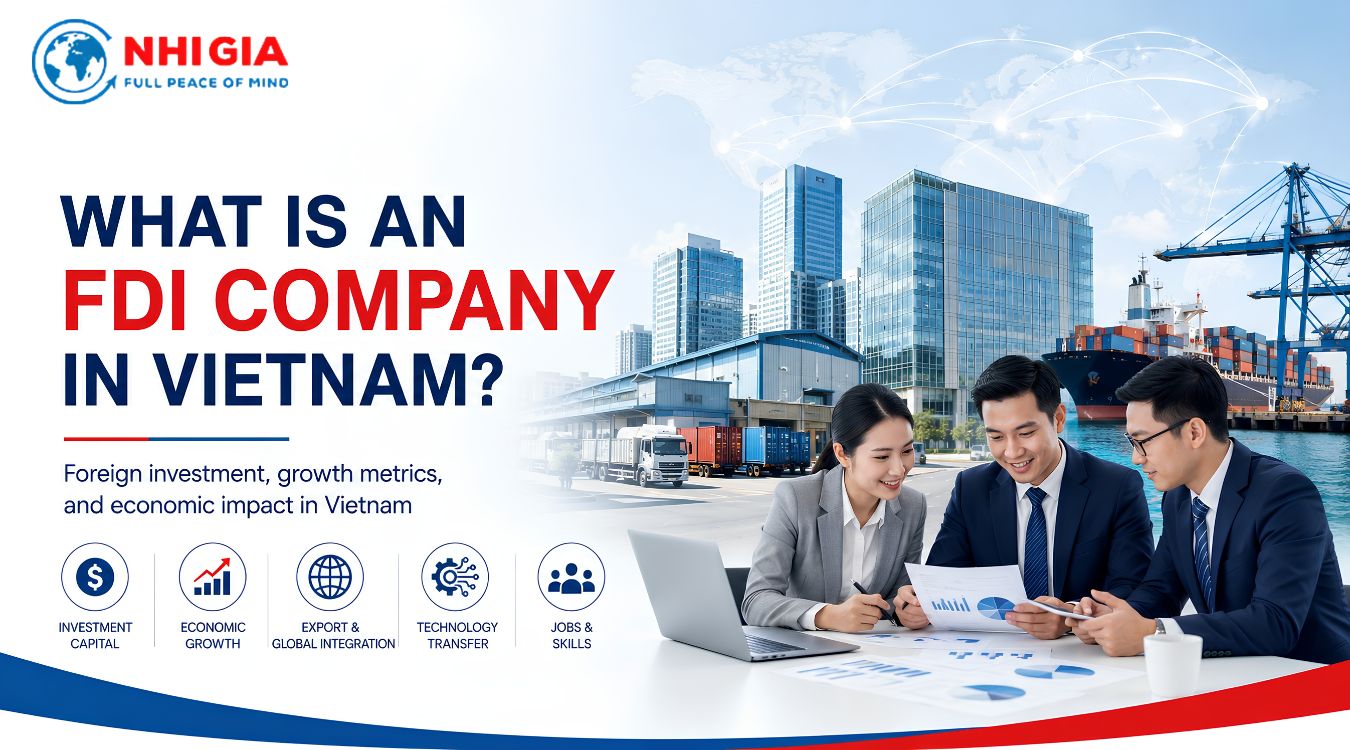
As Vietnam continues to deepen its integration into the global economy, the country has become an increasingly important destination for foreign direct investment. Along with the expansion of manufacturing, trade, services, technology and industrial development projects, the term “FDI company” is now widely used in economic reports, investment updates and corporate management discussions.
Beyond adding capital to the economy, foreign-invested enterprises play an important role in promoting exports, creating jobs, supporting technology transfer, improving production capacity and connecting Vietnam more deeply with global supply chains. However, to properly understand what an FDI company is, it is necessary to look beyond investment capital alone and consider the actual impact of this sector on the business environment, the labor market and legal requirements related to foreign investors, experts and employees working in Vietnam.
What Is an FDI Company?
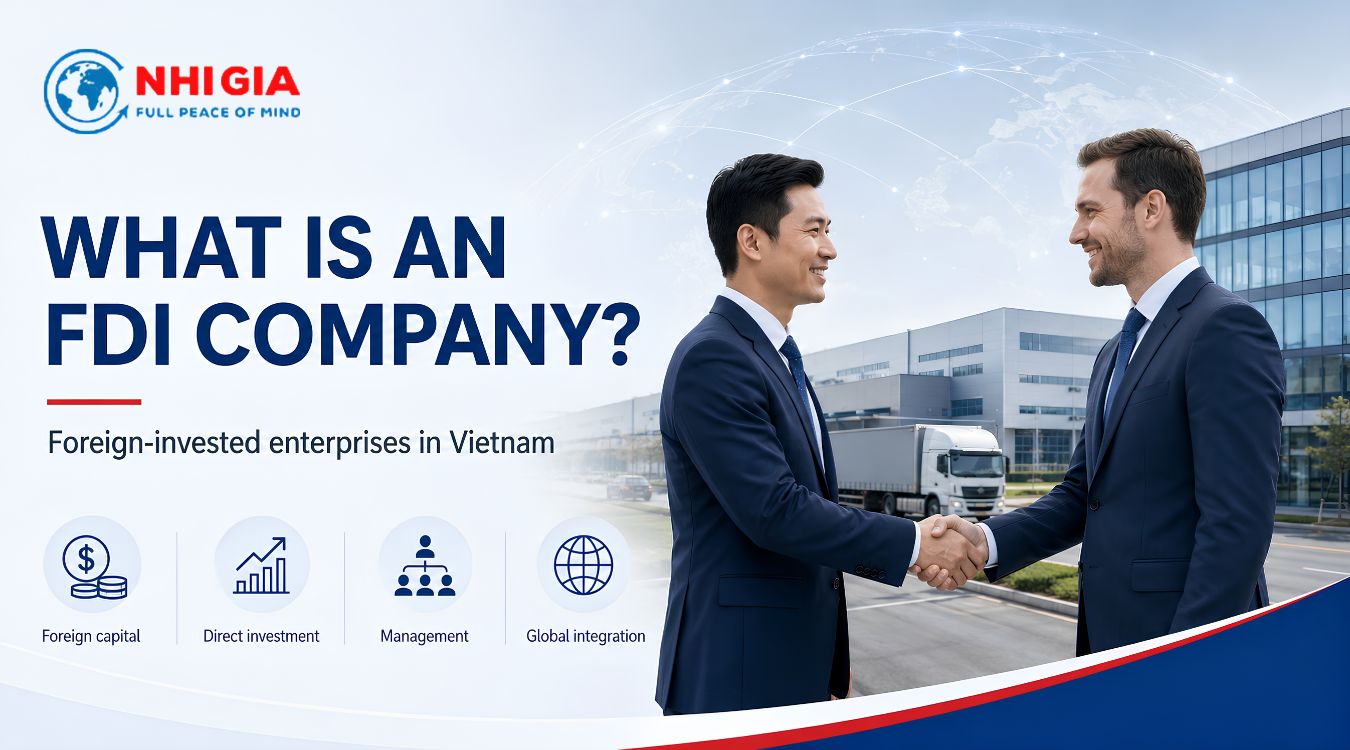
FDI stands for Foreign Direct Investment. It refers to a form of investment in which a foreign investor brings capital, technology, management experience or other resources into another country to conduct investment and business activities. In many cases, the investor also participates in the management, operation or implementation of the project or enterprise.
In Vietnam, the term “FDI company” is commonly used to refer to an enterprise with foreign investment capital. From a legal perspective, the closest concept is a foreign-invested economic organization, meaning an economic organization that has foreign investors as members or shareholders.
An FDI company in Vietnam may take different forms, including:
- A company established in Vietnam by foreign investors;
- A company in which foreign investors contribute capital, purchase shares or acquire contributed capital;
- A joint venture between Vietnamese investors and foreign investors;
- A Vietnamese company that later receives capital contribution from foreign investors.
The core characteristic of an FDI company is the participation of foreign capital. Depending on the ownership ratio, business sector and investment structure, the enterprise may need to meet specific investment conditions, legal procedures and management requirements under Vietnamese law.
Why Are FDI Companies Increasingly Important in Vietnam?
Vietnam has many advantages in attracting foreign investment, including its strategic geographic location, stable political environment, young workforce, competitive production costs, extensive network of free trade agreements and growing role in regional supply chains.
As many multinational corporations continue to diversify their supply chains, Vietnam remains a notable investment destination in Asia. FDI inflows are no longer limited to traditional manufacturing projects, but have expanded into high technology, energy, logistics, trade, services, industrial real estate and research and development activities.
The growth of FDI companies therefore reflects not only the attractiveness of Vietnam’s investment environment, but also the country’s deeper integration into international markets.
Key Growth Indicators of the FDI Sector in Vietnam
Registered capital, disbursed capital, number of projects, sector structure and import-export performance are important indicators for assessing the growth and actual performance of the FDI sector.
Registered FDI Capital Remains at a Large Scale
In 2025, total registered foreign investment in Vietnam, including newly registered capital, adjusted capital, capital contributions and share purchases, reached more than USD 38.4 billion. This figure shows that Vietnam continued to maintain its appeal to international investors despite ongoing uncertainties in the global economy.
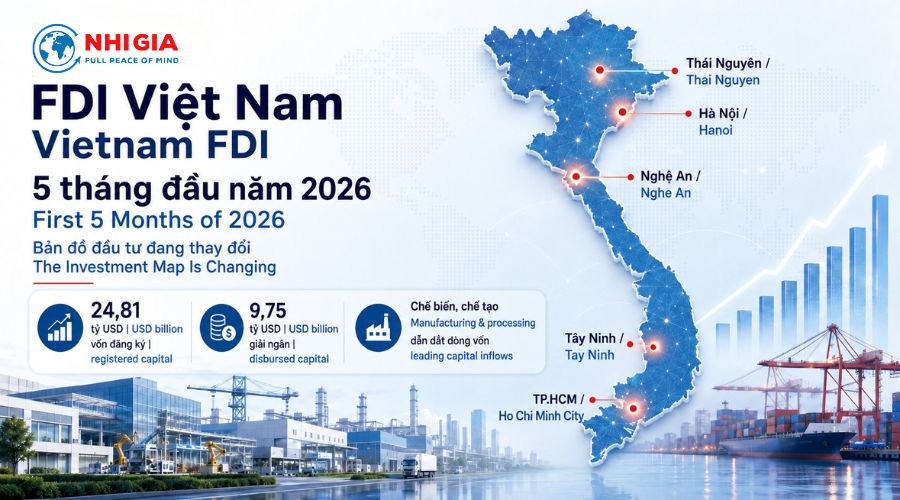
In the first quarter of 2026, total registered foreign direct investment reached more than USD 15.2 billion, up 42.9% year-on-year. This increase indicates that foreign investors continue to show strong interest in Vietnam, particularly in manufacturing and processing, high technology and energy.
However, this figure should be interpreted carefully. Growth in registered capital can be significantly affected by a small number of large-scale projects. Therefore, to assess the real strength of the FDI sector, businesses should not look only at total registered capital, but also consider disbursed capital, sector structure and the expansion trend of existing projects.
Disbursed FDI Capital Shows Stable Growth
Disbursed capital is an important indicator because it reflects the amount of investment that is actually put into the economy. In 2025, disbursed foreign investment capital in Vietnam reached more than USD 27.6 billion, up 9% compared with the previous year.
In the first quarter of 2026, disbursed FDI reached more than USD 5.4 billion, up 9.1% year-on-year. This is a positive signal because it shows that FDI projects are not only registered on paper, but are also being implemented, financed and put into real operation.
For the economy, stable growth in disbursed capital is more meaningful than registered figures that mainly represent investment commitments. This is the capital associated with factories, machinery, employees, operations, exports and actual production and business activities.
Manufacturing and Processing Continue to Lead FDI Attraction
Vietnam’s FDI sector remains strongly concentrated in the manufacturing and processing industry. In 2025, this sector attracted more than USD 21 billion, accounting for more than 54.7% of total registered investment. In the first quarter of 2026, manufacturing and processing continued to lead with more than USD 9.2 billion, accounting for more than 60.8% of total registered capital.
This shows that Vietnam continues to play an important role in regional production networks. Projects in electronics, components, equipment, mechanical engineering, supporting industries and high technology not only create production value, but also increase demand for technical workers, foreign experts, managers, engineers, operational consultants and international coordination personnel.
FDI Companies Play a Major Role in Import and Export Activities
FDI companies are among the main drivers of Vietnam’s export performance. In 2025, the foreign-invested sector recorded export value of over USD 360 billion, including crude oil. In the first quarter of 2026, this sector continued to account for a significant share of the country’s total export and import turnover.
This role shows that FDI companies in Vietnam do not only serve the domestic market. Many are part of the global supply chains of multinational corporations, participating in component manufacturing, assembly, processing, quality inspection and finished goods exports.
How Do FDI Companies Contribute to Vietnam’s Economy?
Adding Investment Capital to the Economy
The most visible contribution of FDI companies is the large amount of investment capital they bring into Vietnam. This capital supports the development of factories, industrial parks, production infrastructure, logistics centers, offices, distribution systems and related service projects.
For a developing economy, FDI is an important resource for expanding production capacity, increasing industrial scale and accelerating modernization.
Promoting Exports and Global Supply Chain Integration
The FDI sector plays a major role in Vietnam’s exports. Many of Vietnam’s key export categories, such as electronics, machinery, equipment, textiles, footwear, components and industrial products, have strong participation from foreign-invested enterprises.
Through the operations of FDI companies, Vietnam is connected more deeply to global supply chains. This is an important factor in strengthening Vietnam’s position in international trade and creating a foundation for domestic enterprises to participate in larger value chains.
Creating Jobs and Improving Human Resource Quality
FDI companies create a large number of direct and indirect jobs in Vietnam. In addition to production workers, this sector also requires engineers, technical specialists, managers, legal personnel, accountants, logistics staff, administrative teams and operational support positions.
Beyond job creation, FDI companies also contribute to improving labor management standards, production processes, professional skills and industrial working practices. Vietnamese employees working in FDI environments often have the opportunity to access international procedures, new technologies and more professional operational standards.
Supporting Technology Transfer and Management Experience
One of the major expectations of attracting FDI is the transfer of technology and management experience. FDI companies often bring management systems, quality standards, production technologies, control procedures and operational methods that have been applied in multiple markets.
This impact can spread to domestic enterprises through supplier relationships, production cooperation, workforce training and compliance requirements set by multinational corporations.
However, this spillover effect does not happen automatically. To make better use of FDI resources, Vietnam needs to continue developing supporting industries, improving the capacity of domestic enterprises and enhancing workforce quality.
Increasing Budget Revenue and Supporting Local Development
FDI companies contribute to the state budget through taxes, fees, land rental payments, import-export activities and other financial obligations. In addition, the presence of large FDI projects often creates demand for infrastructure, housing, logistics, education, healthcare, trade and local services.
Many fast-industrializing provinces in Vietnam are closely associated with the strong development of the FDI sector. When a major project begins operation, its impact extends beyond the factory itself and spreads to suppliers, service providers and the surrounding labor market.

Increasing Demand for Foreign Experts and Legal Procedures
As FDI companies expand their operations in Vietnam, the demand for bringing foreign experts, managers, technical workers and executive personnel into the country also increases. These personnel often play important roles in company establishment, project operation, technology transfer, workforce training and quality control.
Along with the need for international personnel, businesses must also prepare related legal procedures, such as:
- Entry visas for foreigners;
- Work permits or work permit exemption confirmations;
- Temporary residence cards for foreign experts, managers and employees;
- Consular legalization of foreign documents;
- Certified translation of documents;
- Legal documents related to investment, employment, residence and international mobility.
This is why many FDI companies need a professional support partner that understands documentation procedures, processing timelines and legal requirements in Vietnam.
What Should Vietnamese Businesses Learn from the Growth of the FDI Sector?
The development of the FDI sector creates many opportunities, but also brings significant challenges for Vietnamese enterprises.
In terms of opportunities, domestic companies can participate in supply chains and become suppliers, service partners or operational support providers for FDI enterprises. Sectors such as logistics, human resources, legal services, translation, housing for foreign experts, air ticketing, administrative services and market support all have room for growth.
In terms of challenges, Vietnamese businesses must compete in an environment with higher standards, including product quality, delivery timelines, transparent documentation, management capacity and the ability to meet international requirements. Without upgrading their capabilities, domestic enterprises may remain limited to simple supplier roles with low added value.
Therefore, FDI is not only a story about foreign investors. It is also a signal for Vietnamese businesses to reassess their competitiveness, level of international integration and readiness to work with global partners.
Nhi Gia Supports FDI Companies and Foreign-Related Businesses in Vietnam
As foreign direct investment continues to play an important role in Vietnam, the need to prepare proper documentation for foreign experts, managers, technical workers and international partners is becoming increasingly practical.
Nhi Gia supports businesses with procedures related to visas, work permits, temporary residence cards, consular legalization, document translation and international mobility needs. With experience serving corporate clients, Nhi Gia assists businesses in reviewing, preparing and completing documentation based on each specific case, helping companies stay more proactive in workforce planning and operations.
Frequently Asked Questions About FDI Companies in Vietnam
What is an FDI company?
An FDI company is commonly understood as an enterprise with foreign investment capital. It may be a company established by foreign investors, a joint venture, or a Vietnamese company in which foreign investors contribute capital, purchase shares or acquire contributed capital.
What is the difference between FDI and foreign indirect investment?
FDI is direct investment and is usually associated with the investor’s participation in business management, project implementation or company operations. Foreign indirect investment is typically made through securities, shares or financial instruments without direct involvement in managing the enterprise.
How do FDI companies contribute to Vietnam’s economy?
FDI companies contribute investment capital, promote exports, create jobs, support technology transfer, improve production capacity, increase budget revenue and help Vietnam participate more deeply in global supply chains.
Why do FDI companies often need foreign experts?
Many FDI companies need foreign experts to manage projects, transfer technology, train employees, control quality and ensure that operations follow international standards.
What procedures should FDI companies prepare for foreigners working in Vietnam?
Depending on the position and working period, businesses may need to prepare visas, work permits, temporary residence cards, consular legalization documents, certified translations and other documents related to employment or personnel appointment.
Sources of Reference:
- https://www.seabank.com.vn/tin-tuc/tu-van-dich-vu/tin-cho-khach-hang-doanh-nghiep/fdi-la-gi-va-nhung-thong-tin-doanh-nghiep-can-biet
- https://thitruongtaichinhtiente.vn/von-fdi-thuc-hien-cao-nhat-4-thang-dau-nam-trong-5-nam-qua-82581.html