Can International Students Work Part-Time in Australia?
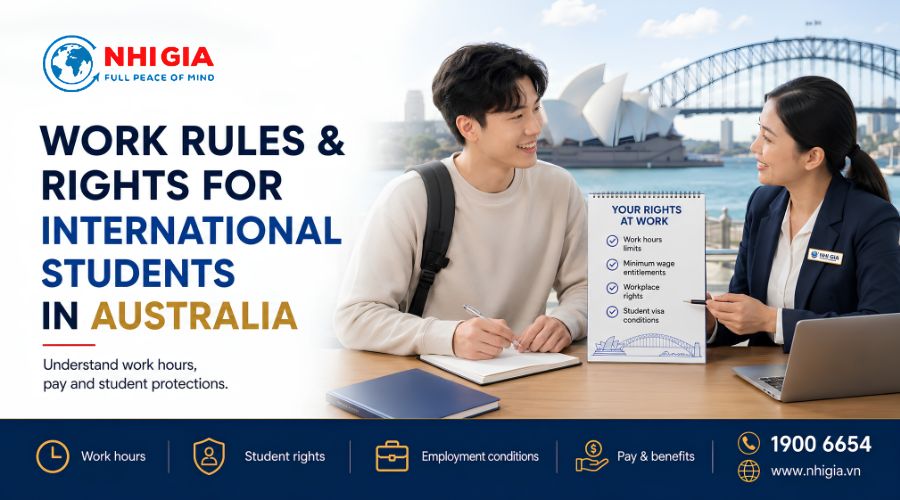
International students in Australia may work part-time if they hold a valid student visa and comply with the work conditions attached to the visa. Under the Student visa Subclass 500, students are generally allowed to work during their course and work unlimited hours during official course breaks.
However, having work rights does not mean students can work unlimited hours while the course is in session. Working beyond the permitted hours or working before being allowed to do so may breach visa conditions.
Therefore, before accepting a job, international students should carefully check their visa conditions, study schedule, official breaks and school requirements. Part-time work is a useful way to gain experience and support living costs, but it should not affect the main purpose of studying in Australia.
How Many Hours Can International Students Work in Australia?
Under current rules, Student visa Subclass 500 holders are generally allowed to work up to 48 hours per fortnight while their course is in session. During official course breaks, students may work unlimited hours.
Important notes include:
- Students must not start working before their course has commenced;
- The 48-hour limit is calculated per fortnight, not simply as a fixed 24 hours every week;
- A student may work fewer hours in one week and more in the next, as long as the total in the fortnight does not exceed the limit;
- During official course breaks, students may work more hours, but should still consider health and study commitments;
- Postgraduate research students may have different work conditions and should check their visa conditions directly;
- Dependants accompanying student visa holders may have separate work limitations under their visa conditions.
Students should not assume that they can work full-time throughout the study period. Exceeding permitted work hours may affect visa compliance.
Minimum Wage for International Students in Australia in 2026
International students working in Australia have workplace rights like other employees. Employers cannot pay a lower wage simply because the worker is an international student.
At the time of this update, Australia’s National Minimum Wage is AUD 24.95 per hour or AUD 948 per week before tax, effective from 1 July 2025. However, many jobs are not paid directly under the National Minimum Wage, but under an award or enterprise agreement for the relevant industry or occupation. In such cases, actual pay may be higher, especially for weekend, public holiday, night or overtime work.
International students should check:
- Pay rate for the relevant industry or occupation;
- Whether penalty rates apply for weekends, public holidays or night shifts;
- Whether casual loading applies for casual work;
- Whether pay is before or after tax;
- Pay frequency;
- Whether payslips correctly show hours and pay rates.
Workplace Rights of International Students in Australia
International students in Australia are protected by Australian workplace laws. According to the Fair Work Ombudsman, all employees have basic rights to minimum pay and conditions regardless of migration status. International students can still contact Fair Work to ask about pay, entitlements or working conditions.
Basic workplace rights may include:
- Being paid at least the correct minimum rate;
- Receiving payslips;
- Being paid on time;
- Receiving penalty rates, overtime or allowances if applicable;
- Working in a safe environment;
- Being protected from exploitation, threats or discrimination;
- Receiving rights under the National Employment Standards depending on employment type;
- Receiving superannuation if eligible;
- Accessing support from the Fair Work Ombudsman when workplace issues arise.
If an employer asks a student to work beyond visa limits, pays cash below minimum rates, keeps the student’s passport, threatens to report them to immigration or pressures them to sign unclear documents, the student should be cautious and seek appropriate support.
What Is the Difference Between Part-Time and Casual Work?
In Australia, international students commonly work as part-time or casual employees. These forms differ in stability, working schedule and entitlements.
| Criteria | Part-time job | Casual job |
| Stability | Regular working pattern, with hours generally agreed in advance | More flexible, without firm ongoing work commitment |
| Working hours | Usually regular weekly hours, less than full-time | May vary depending on employer needs |
| Leave entitlements | May receive annual leave and sick leave on a pro-rata basis | Usually does not receive paid annual leave or paid sick leave |
| Pay | Based on the applicable award, agreement or contract | Usually includes casual loading or a casual pay rate to compensate for lack of some paid leave |
| Suitable for | Students wanting more stable hours and income | Students needing flexible shifts or seasonal work |
Important note: casual work does not mean “verbal work,” “no rights” or “whatever the employer wants to pay.” Casual employees still have the right to correct wages, payslips and workplace protections under Australian law.
Do International Students Pay Tax in Australia?
Yes. If an international student earns income from work in Australia, they may need to pay tax under Australian Taxation Office rules. Many overseas students studying in Australia for 6 months or more may be treated as Australian residents for tax purposes, but tax residency should be assessed case by case.
International students should note:
- They should apply for a Tax File Number, or TFN, before or when starting work;
- A TFN helps the employer withhold tax at the correct rate;
- Without a TFN, a worker may have more tax withheld;
- Employment income should be declared in a tax return if required;
- A student may receive a refund or need to pay additional tax depending on income, tax withheld and tax residency status;
- Students should not work “cash in hand” to avoid tax or records, as the risks may be greater than the money they think they save.
If unsure about tax obligations, students should check the ATO website or consult a licensed tax adviser in Australia.
Common Part-Time Jobs for International Students in Australia
International students in Australia can do many legal jobs depending on skills, English ability, study schedule, location and visa conditions. Below are some common job groups.
Restaurant, Café and Hospitality Jobs
This is a common job group for international students because demand is high and shifts are often flexible. Roles may include waiter/waitress, kitchen hand, barista, cashier, table clearing, hotel receptionist or event assistant.
These jobs help students improve English, communication skills and workplace habits in Australia. However, students should check pay rates, working hours, weekend/public holiday penalty rates and workplace safety conditions before accepting a job.
Retail and Customer Service
Retail jobs in supermarkets, convenience stores, shopping centers, fashion stores or customer service are also popular among international students. These roles suit students with communication skills, a friendly attitude and shift availability.
Common positions include sales assistant, cashier, stock assistant, customer support, counter staff or customer service via phone/email.
Tutoring and Academic Support
Students with strengths in academic subjects, languages or professional skills may work as tutors or academic support assistants. This can be done in person or online.
Common areas include English, Vietnamese, Mathematics, academic skills, musical instruments, foreign languages, programming or support for younger students. Students should ensure that the work complies with visa conditions, school rules and tax obligations if income is earned.
Online and Freelance Work
Some international students choose online or freelance work for flexibility. Roles may include content writing, translation, graphic design, data entry, social media management, virtual assistance, video editing or programming.
However, working online does not necessarily mean it is excluded from visa work conditions. If the work is paid, students should check how work hours are counted, tax obligations and relevant rules. Working from a laptop does not automatically make the work invisible under the law.
Seasonal Jobs
Seasonal jobs often appear during course breaks, especially in agriculture, tourism, hospitality, retail and events. Roles may include fruit picking, produce packing, resort work, holiday retail, event assistance or working in tourist areas.
These jobs may help students earn extra income during holidays, but students should check working conditions, accommodation, transport, pay, hours and contract terms before accepting.
Healthcare, Community Care and Personal Support
Some international students, especially those studying healthcare, nursing, community care or social work, may find part-time roles in care support. Work may include aged care assistant, disability support worker, clinic assistant, dental assistant or administrative support in healthcare settings.
These roles may require certificates, background checks, safety training, communication skills and responsibility. Students should not accept such work if they do not understand the legal requirements or have not received suitable training.
Volunteering
Volunteering is a good opportunity for international students to expand networks, understand local culture and develop soft skills. Common activities may include community support, environmental projects, education, cultural events or non-profit organizations.
However, students should distinguish genuine volunteering from disguised unpaid work. If a role should legally be paid but is labelled “volunteer” to avoid obligations, students should be cautious.
Important Notes for International Students Working in Australia
Check Visa Conditions Before Accepting a Job. International students should check their Subclass 500 visa and attached conditions before accepting a job. They should not rely only on friends, employers or social media. Visa conditions are the key basis.
Prioritize Study. The main purpose of a student visa is study. Part-time work should support experience and living costs, not cause students to miss classes, stop studying or reduce academic performance.
Avoid Undocumented Work or Underpayment. Students should avoid jobs without clear records, below-minimum pay, no payslips or requests to work beyond visa limits. These jobs may create risks relating to tax, workplace rights and visa status.
Keep Work Records. Students should keep contracts, rosters, timesheets, payslips, bank transfer records, emails and related documents. These are important evidence if they need to check pay, tax or workplace rights.
How Nhị Gia Supports Australian Student Visa Applications
Part-time work is an important part of the Australian study experience, but before thinking about work, students need a suitable student visa application, a clear study purpose and a convincing financial plan.
With more than 20 years of experience in visa and international dossier support, Nhị Gia assists clients in preparing Australian student visa applications based on each specific case.
Nhị Gia supports clients with:
- Advising on Australian Student visa Subclass 500 requirements;
- Reviewing study, financial and study purpose documents;
- Guiding preparation of personal, academic, financial and study plan documents;
- Supporting translation, notarization/certification where required;
- Reviewing information before submission;
- Advising on visa conditions, part-time work and stay obligations in Australia;
- Tracking the application and supporting additional requests if any;
- Maintaining confidentiality of clients’ personal information and dossiers.
Nhị Gia does not guarantee visa outcomes for every application, as the final decision belongs to the Australian Department of Home Affairs. However, preparing a clear, transparent and consistent dossier from the beginning can help reduce errors and strengthen the application.
If you are planning to study in Australia and need consultation on visa documents, work conditions, financial planning or suitable study pathways, please contact Nhị Gia for case-specific support.
Please contact Hotline 1900 6654 or email info@nhigia.vn for detailed support from Nhị Gia’s specialists.