What Is the Difference Between a Business Visa and a Work Visa in Vietnam?
Business visas and work visas are common visa groups for foreign nationals entering, staying and working with enterprises in Vietnam. However, these two visa types differ in purpose, dossier requirements, validity and eligible applicants.
A business visa is generally suitable for foreign nationals entering Vietnam to work with enterprises or organizations, offer services, establish commercial presence or carry out commercial activities as prescribed. A work visa, on the other hand, is suitable for foreign nationals working in Vietnam with a work permit or work permit exemption confirmation.
Choosing the wrong visa type may cause the dossier to require adjustment, become inconsistent with the stay purpose or affect later procedures such as work permit, visa extension, new visa issuance or temporary residence card application. Therefore, foreign nationals and sponsoring enterprises should identify the correct entry purpose from the beginning.
What Is a Vietnam Business Visa?
Vietnam business visa is a visa group issued to foreign nationals entering Vietnam for enterprise-related, commercial or organizational activities with legally established entities in Vietnam.
Under current regulations, common business visa symbols include DN1 and DN2.
What Is a DN1 Visa?
DN1 visa is issued to foreign nationals working with enterprises or other organizations having legal status under Vietnamese law.
DN1 visa is usually suitable for cases such as:
- Foreign nationals entering Vietnam to work with business partners;
- Persons invited by a Vietnamese enterprise for meetings, exchanges, market research, contract signing or commercial implementation;
- Experts, business representatives or foreign partners entering Vietnam under the invitation of a legally established company or organization;
- Foreign nationals who need to stay in Vietnam for activities related to the sponsoring enterprise but are not necessarily under a work visa category.
It should be noted that DN1 visa does not automatically replace a work permit. If the foreign national officially works, receives salary or holds a position as an expert, manager, executive director or technical worker in Vietnam, the enterprise should also check requirements relating to work permits, work permit exemption confirmation, work visas or suitable temporary residence cards.
What Is a DN2 Visa?
DN2 visa is issued to foreign nationals entering Vietnam to offer services, establish commercial presence or carry out other activities under international treaties to which Vietnam is a member.
DN2 should not be understood as a visa for investors or shareholders of companies in Vietnam. If the foreign national is a foreign investor in Vietnam or a representative of a foreign organization investing in Vietnam, the dossier should be reviewed under the appropriate investor visa categories such as ĐT1, ĐT2, ĐT3 or ĐT4 depending on capital contribution value and specific conditions.
Validity of a Business Visa
DN1 and DN2 visas are valid for no more than 01 year. The actual granted duration may be shorter depending on entry purpose, sponsorship dossier, passport validity, stay plan and the decision of the competent authority.
When the visa expires, the foreign national may be considered for a new visa if the requirements are met and a suitable sponsorship dossier is provided.
What Is a Vietnam Work Visa?
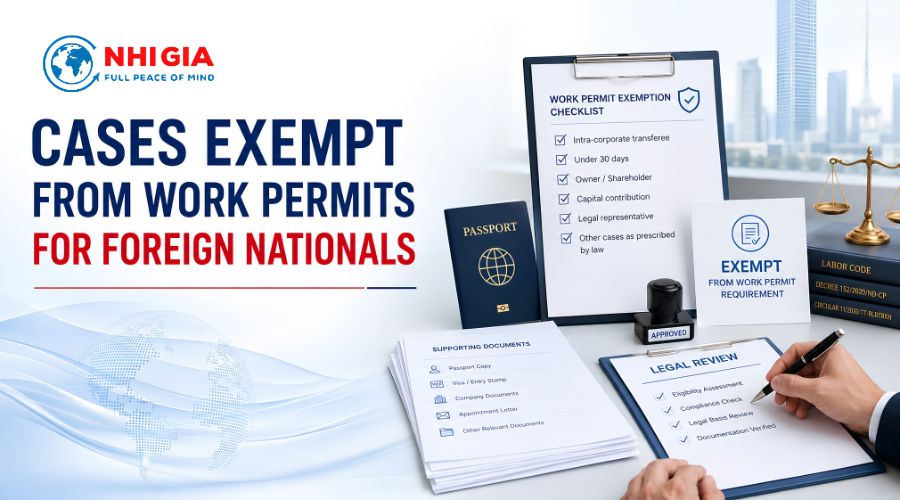
Vietnam work visa is a visa group issued to foreign nationals working in Vietnam with a work permit or a work permit exemption confirmation.
Under current regulations, work visas include LĐ1 and LĐ2. There is no LĐ3 visa symbol in the current work visa group.
What Is an LĐ1 Visa?
LĐ1 visa is issued to foreign nationals working in Vietnam who have confirmation that they are not subject to a work permit, except where an international treaty to which Vietnam is a member provides otherwise.
LĐ1 visa is usually relevant to foreign workers exempt from work permits under Vietnamese labor regulations, but proper confirmation documents are still required to prove the exemption status.
What Is an LĐ2 Visa?
LĐ2 visa is issued to foreign nationals working in Vietnam who are required to have a work permit.
This visa usually applies to foreign workers officially working in Vietnam in positions such as experts, managers, executive directors or technical workers, once they have been granted a work permit suitable for the position and employing enterprise.
Validity of a Work Visa
LĐ1 and LĐ2 visas are valid for no more than 02 years. In practice, the visa validity usually depends on the validity of the work permit, work permit exemption confirmation, passport and sponsorship dossier.
If the foreign national needs to work long-term in Vietnam, the enterprise may consider applying for a suitable temporary residence card instead of relying only on short-term visas. Temporary residence cards with LĐ1 or LĐ2 symbols follow statutory validity rules and are often more suitable for stable, long-term employment.
Comparison Between Business Visa and Work Visa
| Criteria | Business Visa DN1/DN2 | Work Visa LĐ1/LĐ2 |
| Main purpose | Working with enterprises, offering services, establishing commercial presence or conducting suitable commercial activities | Working in Vietnam with a work permit or work permit exemption confirmation |
| Common symbols | DN1, DN2 | LĐ1, LĐ2 |
| Eligible applicants | Foreign nationals working with legally established enterprises/organizations or conducting commercial activities as prescribed | Foreign nationals officially working in Vietnam |
| Work permit | Not always required, depending on the nature of activities in Vietnam | LĐ2 requires a work permit; LĐ1 requires work permit exemption confirmation |
| Visa validity | No more than 01 year | No more than 02 years |
| Temporary residence card possibility | DN1/DN2 are not common long-term temporary residence card categories | LĐ1/LĐ2 may be considered for temporary residence cards if requirements are met |
| Suitable for | Business trips, commercial cooperation, partner meetings, short-term enterprise-related activities or sponsorship-based business purposes | Legal, stable and long-term employment in Vietnam |
| Risk if misused | May be unsuitable if the real purpose is formal employment and salary-based work in Vietnam | Requires proper labor documents; without work permit/exemption confirmation, the application may not qualify |
Should You Choose a Business Visa or a Work Visa?
The visa should not be chosen based on which one seems “easier” or “faster.” The correct visa type should be determined based on the entry purpose and the actual nature of activities in Vietnam.
If the foreign national enters Vietnam only for partner meetings, market research, contract signing, service offering or working with enterprises within suitable commercial activities, a DN1 or DN2 business visa may be considered.
If the foreign national officially works in Vietnam, has an employment contract, receives salary, or holds a position as an expert, manager, executive director or technical worker, the enterprise should check work permit or work permit exemption requirements, then consider LĐ1 or LĐ2 visa.
In other words, a business visa is suitable for activities with enterprises; a work visa is suitable for working for an enterprise in Vietnam under a clear employment relationship.
Common Scenarios When Choosing the Right Visa
Case 1: Entering Vietnam for Meetings, Market Research or Contract Signing
If a foreign national enters Vietnam to meet partners, conduct market research, negotiate, sign contracts or work short-term with a Vietnamese enterprise without establishing a formal employment relationship in Vietnam, the dossier is usually reviewed under the appropriate business visa direction.
Case 2: Working Long-Term for a Company in Vietnam
If a foreign national works long-term for a company in Vietnam, holds a specific position, receives salary and is managed by the employing enterprise, the enterprise should check work permit or work permit exemption requirements. After that, LĐ1 or LĐ2 work visa is usually the more suitable direction.
Case 3: Foreign Investor Contributing Capital to a Vietnamese Company
If a foreign national contributes capital, invests or represents a foreign organization investing in Vietnam, the dossier should not automatically use DN2 visa. This case should be reviewed under investor visa categories ĐT1, ĐT2, ĐT3 or ĐT4 depending on capital contribution value, investor role and related legal conditions.
Case 4: Foreign National Enters on a DN Visa but Later Needs Formal Employment
If a foreign national enters Vietnam on a business visa but later needs to work officially in Vietnam, the enterprise should check whether visa purpose conversion or new visa issuance is possible under regulations.
Visa purpose conversion is not always approved. The dossier usually requires documents proving sponsorship for employment and a work permit or work permit exemption confirmation if the case qualifies for conversion.
How Do Business Visa and Work Visa Dossiers Differ?
Specific dossiers may vary depending on nationality, submission location, sponsoring enterprise, foreign national’s status and requirements of the competent authority. However, the basic distinction is as follows:
Business Visa Dossier
A business visa dossier usually focuses on proving that the entry purpose is related to business or commercial activities.
Documents commonly reviewed include:
- Passport of the foreign national;
- Expected entry and stay information;
- Invitation/sponsorship letter from the Vietnamese enterprise or organization;
- Legal documents of the sponsoring enterprise;
- Information about business purpose, cooperation, partner meetings or commercial activities;
- Documents proving the relationship between the foreign national and the sponsoring enterprise if needed;
- Forms required by the immigration authority.
Work Visa Dossier
A work visa dossier is directly related to the foreign national’s lawful employment status in Vietnam.
Documents commonly reviewed include:
- Passport of the foreign national;
- Work permit or work permit exemption confirmation;
- Sponsorship letter from the employing enterprise in Vietnam;
- Legal documents of the sponsoring enterprise;
- Employment contract or documents proving the job position if required;
- Temporary residence information in Vietnam;
- Forms required by the immigration authority.
Can a Business Visa Be Converted to a Work Visa?
Under regulations, visa purpose cannot be converted except in certain cases permitted by law. One case that may be considered is where the foreign national is invited and sponsored by an agency or organization to work and has a work permit or work permit exemption confirmation.
Therefore, if a foreign national is using a business visa but wants to work officially in Vietnam, the enterprise should check:
- Whether the foreign national qualifies for a work permit or work permit exemption;
- Whether the sponsoring enterprise is eligible to employ foreign workers;
- Whether the current visa remains valid;
- Whether the dossier falls under a case eligible for purpose conversion or new visa issuance;
- Whether the person needs to exit Vietnam and apply for the correct visa category.
Foreign nationals should not work officially while holding only a business visa without proper labor documents, as this may create legal risks for both the employee and the enterprise.
How Nhị Gia Advises on Choosing Between a Business Visa and a Work Visa
Choosing between a business visa and a work visa should not be based only on the desired length of stay. It should be based on entry purpose, the actual nature of work, sponsoring enterprise dossier and the foreign national’s legal status.
With more than 20 years of experience in visas, work permits, temporary residence cards and legal dossiers for foreign nationals in Vietnam, Nhị Gia supports enterprises and foreign nationals in identifying the suitable dossier direction for each specific case.
Nhị Gia supports clients with:
- Checking entry purpose and stay needs in Vietnam;
- Distinguishing whether DN1, DN2, LĐ1, LĐ2 or another visa group is suitable;
- Reviewing the sponsoring enterprise’s legal dossier;
- Checking work permit or work permit exemption confirmation status;
- Advising on work visa, visa extension, new visa issuance or temporary residence card options;
- Guiding dossier preparation according to immigration authority requirements;
- Supporting translation, notarization/certification if foreign documents are involved;
- Tracking application progress and supporting additional requests if any;
- Maintaining confidentiality of clients’ personal and corporate dossiers.
Nhị Gia does not guarantee outcomes for every application, as the final decision belongs to the competent authority. However, identifying the correct visa type and preparing a suitable dossier from the beginning can help reduce errors, save time and minimize legal risks during the foreign national’s stay and work in Vietnam.
If you are unsure whether to choose a business visa or a work visa for a foreign national in Vietnam, you should review the dossier before proceeding to avoid choosing the wrong visa type, incorrect stay purpose or missing required labor documents.
Please contact Hotline 1900 6654 or email info@nhigia.vn for case-specific consultation from Nhị Gia’s specialists.