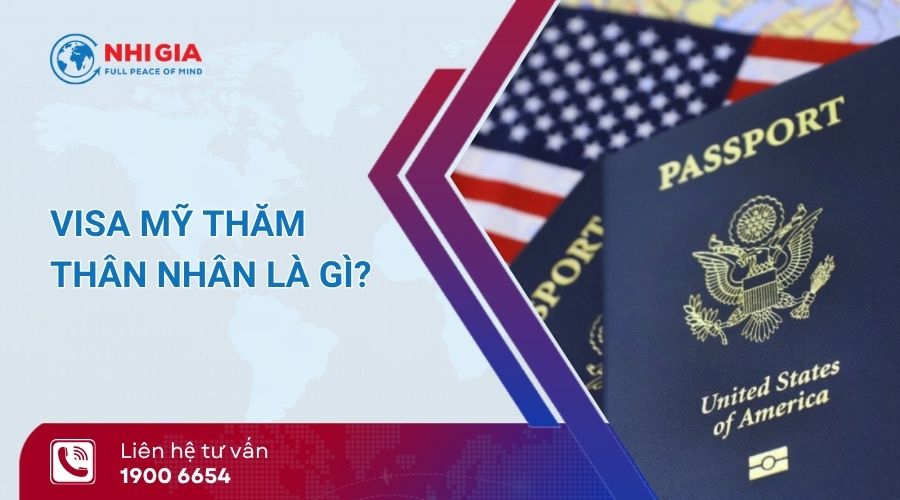
A U.S. family visit visa is commonly associated with the B-2 visitor visa category. It is a nonimmigrant visa for foreign nationals who wish to travel to the United States temporarily to visit family members or friends, travel for tourism, receive medical treatment or participate in other permitted short-term activities.
For many Vietnamese applicants, the B-2 visa is a common option for visiting children, parents, siblings, relatives or friends who are living, studying or working in the United States. However, having a family member in the United States does not guarantee visa approval. The applicant must still demonstrate a clear purpose of travel, suitable financial capacity and sufficient ties to return to Vietnam after the trip. This article provides an overview of the requirements, documents, process, fee and key notes for applying for a U.S. family visit visa.
What is a U.S. family visit visa?
A U.S. family visit visa is a common term used for a B-2 visa when the applicant travels to the United States to visit relatives, friends or combine the visit with tourism for a short period.
The B-2 visa is a nonimmigrant visa. This means the applicant is seeking temporary entry into the United States and must intend to leave the United States after the trip. The visa does not permit employment in the United States, does not replace an immigrant visa and does not provide a basis for long-term residence unless the applicant qualifies for another lawful status.
Permitted purposes under the B-2 category may include:
- Visiting parents, children, spouse, siblings or relatives in the United States;
- Visiting friends or acquaintances lawfully residing in the United States;
- Tourism, vacation or sightseeing;
- Attending family events, graduation ceremonies, weddings or special occasions;
- Short-term medical treatment, where appropriate documents are available;
- Participating in social, community or other short-term non-employment activities.
Who may apply for a U.S. family visit visa?
A U.S. family visit visa may be suitable for:
- Parents visiting children studying, working or living in the United States;
- Grandparents visiting children or grandchildren in the United States;
- A spouse visiting a family member in the United States for a short period;
- Siblings or relatives visiting family members;
- Individuals visiting friends or acquaintances in the United States;
- Applicants combining a family visit with tourism.
Depending on the case, the applicant may prepare an invitation letter, documents proving the relationship, travel itinerary, financial records, employment documents and evidence of ties to Vietnam.
How long is a U.S. family visit visa valid?
The validity of a U.S. visa may vary depending on nationality, the application, the consular decision and the reciprocity schedule between the United States and the applicant’s country. For Vietnamese citizens, B-1/B-2 visas may be issued for multiple entries for a specific validity period if the application is approved.
It is important to distinguish between visa validity and authorized stay in the United States.
- Visa validity refers to the period during which the visa may be used to seek entry into the United States;
- Authorized stay refers to the period the traveler is allowed to remain in the United States after each entry, as determined by U.S. Customs and Border Protection and reflected in the I-94 record.
Therefore, even if the visa remains valid, the traveler must comply with the period of stay granted upon entry. Overstaying may seriously affect future U.S. visa applications and entries.
Requirements for a U.S. family visit visa
To be considered for a U.S. family visit visa, the applicant must demonstrate eligibility for a nonimmigrant visa under U.S. law.
Common factors considered include:
- A clear purpose of travel consistent with the B-2 visa category;
- A temporary stay plan in the United States;
- Suitable financial capacity to cover the trip, or reasonable financial support from another party;
- Employment, study, family, property or other ties in Vietnam;
- A credible reason to return to Vietnam after the trip;
- Truthful and consistent information in the DS-160 form, supporting documents and interview;
- No intention to use the family visit visa for employment, long-term residence or a purpose inconsistent with the visa category.
In practice, U.S. visa applications are assessed based on the overall circumstances of the applicant. No single document can guarantee visa approval.
Required documents for a U.S. family visit visa
The application usually includes mandatory documents and supporting documents. The applicant should prepare documents that are clear, truthful and consistent with the information declared in the DS-160 form.
Mandatory documents
In general, the applicant should prepare:
- Passport valid for the intended travel and entry requirements;
- DS-160 confirmation page;
- Visa fee payment receipt;
- Appointment confirmation letter;
- U.S. visa photo if required by the system or consular post;
- Previous passports showing visa or travel history, if available.
Documents proving the family visit purpose
Depending on the case, the applicant may prepare:
- Invitation letter from the relative or friend in the United States;
- Copy of the inviter’s passport, green card, certificate of citizenship, visa or lawful status document;
- Documents proving the relationship, such as birth certificate, marriage certificate, former household registration, family photos or relevant identity documents;
- Address, phone number, residence status and employment information of the inviter in the United States;
- Proposed travel itinerary;
- Documents related to a family event, graduation, wedding or specific reason for the visit, if applicable.
An invitation letter does not guarantee visa approval, but it may help clarify the purpose of travel and the relationship between the applicant and the inviter in the United States.
Financial documents
The applicant should demonstrate the ability to pay for the trip, or show reasonable financial support if the relative in the United States will cover part or all of the expenses.
Financial documents may include:
- Bank statements;
- Savings account or bank balance confirmation;
- Income documents;
- Employment contract, payslips or employment confirmation;
- Business registration, tax records or revenue documents if the applicant owns a business or household business;
- Property documents, vehicle registration, shareholding or other asset documents;
- Financial support letter and financial documents of the relative in the United States, if applicable.
Financial evidence should be consistent with the travel duration, itinerary and the applicant’s overall circumstances.
Documents proving ties to Vietnam
Ties to Vietnam are an important factor in a nonimmigrant visa application. The applicant may prepare:
- Employment contract, employment confirmation or appointment decision;
- Business registration or company documents;
- School confirmation if the applicant is a student;
- Family documents such as marriage certificate or children’s birth certificates;
- Asset ownership documents;
- Work, study or family plans after returning to Vietnam.
These documents should reflect the applicant’s actual circumstances and help demonstrate a credible reason to return to Vietnam after the visit.
Application process for a U.S. family visit visa
The process generally includes the following steps.
Step 1: Determine the purpose of travel and suitable visa category
The applicant should determine whether the purpose of travel is family visit, visiting friends, tourism, medical treatment or a combination of permitted short-term purposes under the B-2 visa category.
If the main purpose is employment, long-term study, immigration, marriage or family reunification, another visa category should be considered.
Step 2: Complete the DS-160 form
The applicant completes the DS-160 online form. Information in the DS-160 should be accurate, truthful and consistent with the application, itinerary, inviter details, employment, financial situation and travel history.
After submission, the applicant should save and print the DS-160 confirmation page for appointment scheduling and interview.
Step 3: Pay the visa application fee
The applicant pays the nonimmigrant visa application fee according to the appointment system instructions. The B-2 visa is currently in the non-petition-based nonimmigrant visa category, with an application fee of USD 185 under the U.S. Department of State fee schedule.
The visa application fee is generally non-refundable, even if the visa is not issued or the applicant does not attend the interview.
Step 4: Schedule the visa interview
After paying the fee, the applicant schedules an interview at the U.S. Embassy or Consulate according to the appointment system instructions.
Appointment wait times may vary by location and period. Applicants should check appointment availability early and prepare documents before the interview date.
Step 5: Attend the visa interview
On the interview date, the applicant should arrive on time, bring the necessary documents and answer the consular officer’s questions truthfully, clearly and concisely.
Questions often focus on:
- Purpose of travel;
- Relatives or friends in the United States;
- Intended length of stay;
- Employment, finances and family in Vietnam;
- Travel history;
- Reasons to return to Vietnam after the trip.
The consular officer may decide based on the DS-160 information, interview and the applicant’s overall circumstances. Not every document brought to the interview will necessarily be reviewed.
Step 6: Receive the result and passport
After the interview, the applicant is usually informed of the preliminary result. If the visa is approved, the passport will be kept for visa issuance and returned through the selected delivery method.
In some cases, the application may require administrative processing or additional information. In such cases, the final result may take longer.
U.S. family visit visa fee
The application fee for a U.S. B-2 family visit visa is currently USD 185 under the U.S. Department of State nonimmigrant visa fee schedule.
Although the fee is stated in USD, applicants in Vietnam may pay in VND according to the exchange rate applied by the payment system at the time of payment.
In addition to the visa application fee paid to the consular authority, applicants may incur other costs, such as:
- Translation or notarization fees, if required;
- Visa photo costs;
- Document preparation costs;
- Travel expenses to the interview location;
- Passport delivery or collection fees, if any;
- Professional consulting fees if using a service provider.
Fees and payment procedures may change according to official instructions. Applicants should check the official information at the time of application.
Processing time for a U.S. family visit visa
For U.S. nonimmigrant visas, applicants are usually informed of the preliminary result after the interview. If the application is approved, the passport will be retained for visa issuance and returned after processing.
However, not every case receives a final result immediately. Some applications may require administrative processing, additional documents or further verification. In such cases, processing time may be extended and there is no fixed timeline for every application.
Applicants should also consider the time required to obtain an interview appointment, complete the DS-160 form, pay the fee, schedule the appointment and prepare documents.
Is an interview required for a U.S. family visit visa?
In general, first-time applicants for a U.S. family visit visa are required to attend an interview at the U.S. Embassy or Consulate.
Some visa renewal applicants may qualify for an interview waiver under the policy in effect at the time. However, interview waiver eligibility does not apply to all applicants, and the consular authority may still require an interview if further review is needed.
Applicants should check the latest interview waiver requirements before submitting a U.S. visa renewal application.
Key notes when applying for a U.S. family visit visa
When preparing a U.S. family visit visa application, applicants should note the following:
- Complete the DS-160 truthfully, clearly and consistently;
- Do not provide inaccurate information about the inviter, itinerary or purpose of travel;
- Prepare financial documents suitable for the intended duration of stay;
- The invitation letter should clearly state the inviter’s information, relationship, timing and reason for the invitation;
- Avoid purchasing non-refundable flight tickets or making major payments before the visa is issued;
- Prepare concise and focused interview answers;
- Do not memorize scripted answers that do not reflect the actual case;
- Do not use false documents or non-transparent information;
- Comply with the authorized stay shown in the I-94 record after entering the United States.
A U.S. visa application should be prepared based on the applicant’s actual circumstances. A clear, consistent and reasonable application is more favorable for review.
Common reasons for U.S. family visit visa refusal
A U.S. family visit visa application may be refused for various reasons, such as:
- The purpose of travel is not clearly demonstrated;
- The applicant does not demonstrate sufficiently persuasive ties to Vietnam;
- Financial capacity is not consistent with the itinerary or intended stay;
- DS-160 information is inconsistent with interview answers;
- Travel, residence or previous visa history raises concerns;
- The inviter’s U.S. status or sponsorship information is unclear;
- Interview answers are inconsistent;
- The consular officer does not have sufficient basis to determine that the applicant will leave the United States after the visit.
If a visa is refused, the applicant should review the application, personal circumstances and possible weaknesses before considering reapplication.
Nhi Gia’s consulting service for U.S. family visit visas
A U.S. family visit visa is a common visa category, but it requires careful preparation regarding truthful information, purpose of travel, ties to Vietnam and interview readiness. Preparation should be based on each applicant’s actual circumstances, especially for applicants with previous refusals, limited financial profile, limited travel history or relatives residing long-term in the United States.
With experience in U.S. visa consulting and international mobility documentation, Nhi Gia assists clients in reviewing their applications and preparing a suitable strategy for each case.
Nhi Gia supports clients with:
- Advising on B-2 family visit visa requirements;
- Reviewing identity, employment, financial and Vietnam ties documents;
- Guiding invitation letters and supporting documents from relatives in the United States;
- Assisting with DS-160 completion based on information provided by the client;
- Guiding visa fee payment and interview appointment scheduling;
- Organizing supporting documents based on the specific case;
- Advising on how to present the travel purpose and prepare for the interview;
- Guiding next steps where documents are requested or where the applicant has a previous visa refusal.
Nhi Gia does not replace the decision-making authority of the U.S. Government and does not guarantee visa approval. The actual service timeline will be advised after reviewing the applicant’s documents, interview appointment availability and specific case requirements.
For consultation on U.S. family visit visas or other short-term U.S. visa categories, please contact Nhi Gia for detailed support.