What Is a Temporary Residence Card for Foreigners?
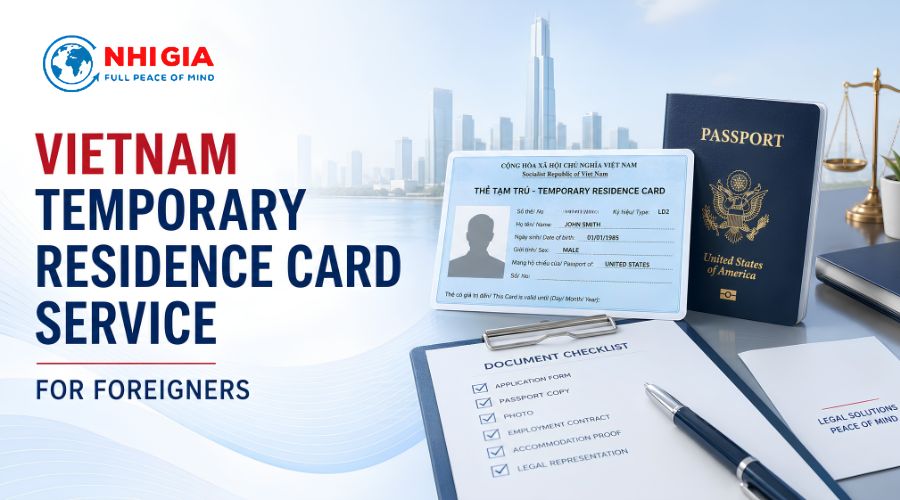
A temporary residence card for foreigners is a document issued by the immigration authority or a competent authority of the Ministry of Foreign Affairs to foreign nationals permitted to reside in Vietnam for a specified period. A temporary residence card is valid in lieu of a visa during its validity period.
According to Consolidated Document 62/VBHN-VPQH dated 23 March 2026, a temporary residence card is issued by the immigration authority or a competent authority of the Ministry of Foreign Affairs to foreign nationals permitted to reside in Vietnam for a fixed term and is valid in lieu of a visa.
Temporary residence cards are commonly considered for groups such as foreign workers with work permits, persons exempt from work permits, investors, relatives of foreigners or Vietnamese citizens, students and certain other eligible groups under the law.
What Is a Temporary Residence Card Used For?
A temporary residence card allows a foreign national to legally reside in Vietnam during the granted validity period without repeatedly applying for new visas while the card remains valid. It is an important document for foreigners who plan to live, work, invest, study or reunite with family in Vietnam for a longer period than short-term visas.
Common benefits include:
- Residing in Vietnam during the validity of the card;
- Using the card in lieu of a visa during its validity;
- More convenient exit and entry into Vietnam if the card remains valid and conditions are met;
- Reducing the need for repeated visa extension procedures;
- Having a more suitable legal basis for certain residence, employment, investment, study or family-related procedures in Vietnam;
- Sponsoring family members to enter Vietnam if eligible and requirements are met.
These benefits should not be understood as automatically applicable in all cases. Foreign nationals must use the temporary residence card for the correct purpose, within its validity and in compliance with Vietnam’s residence regulations.
Types of Temporary Residence Cards for Foreigners in Vietnam
Under current regulations, temporary residence cards are issued to certain groups of foreign nationals corresponding to suitable visa symbols. Common groups include:
| Card group | Main eligible applicants |
| NG3 | Members of diplomatic missions, consular offices, representative offices of UN international organizations, intergovernmental organizations in Vietnam and accompanying family members/domestic helpers during the term |
| LS | Foreign lawyers practicing in Vietnam |
| ĐT1, ĐT2, ĐT3 | Foreign investors in Vietnam or representatives of foreign organizations investing in Vietnam under corresponding conditions |
| NN1, NN2 | Heads of representative offices/projects of international organizations, foreign NGOs; heads of representative offices/branches of foreign traders and foreign economic, cultural or professional organizations in Vietnam |
| LĐ1, LĐ2 | Foreign workers under corresponding work permit or work permit exemption categories |
| DH | Persons entering Vietnam for study or internship |
| PV1 | Foreign journalists and press representatives residing in Vietnam |
| TT | Relatives of eligible foreign nationals or Vietnamese citizens as prescribed |
This list should be checked against the actual dossier because not every foreigner holding a visa in Vietnam is eligible for a temporary residence card. Some visa types are only suitable for short-term stay or are not in the group considered for temporary residence card issuance.
How Long Is a Temporary Residence Card Valid?
The validity of a temporary residence card depends on the card symbol, residence purpose, supporting documents and remaining passport validity. Under the regulations, the issued card validity must be at least 30 days shorter than the remaining validity of the passport.
Common maximum validity periods include:
| Temporary residence card symbol | Maximum validity |
| ĐT1 | Up to 10 years |
| NG3, LV1, LV2, LS, ĐT2, DH | Up to 05 years |
| NN1, NN2, ĐT3, TT | Up to 03 years |
| LĐ1, LĐ2, PV1 | Up to 02 years |
The actual granted validity may be shorter than the maximum period above depending on passport validity, work permit, work permit exemption confirmation, investment documents, family relationship documents or other relevant supporting documents.
Requirements for Temporary Residence Card Issuance
To be considered for a temporary residence card in Vietnam, a foreign national usually needs to meet the following basic requirements:
- Holding a valid passport or international travel document;
- Passport validity being at least 30 days longer than the intended temporary residence card validity;
- Having completed temporary residence declaration at the place of stay;
- Having a suitable inviting/sponsoring agency, organization or individual in Vietnam;
- Having documents proving eligibility for the temporary residence card category;
- Having a residence purpose consistent with the requested temporary residence card symbol;
- Not falling under cases where issuance is not resolved or is restricted under regulations;
- Submitting complete, accurate and consistent documents in the required forms.
Documents proving eligibility may include:
- Work permit or work permit exemption confirmation for employment category;
- Investment registration certificate, enterprise registration certificate and capital contribution documents for investment category;
- Birth certificate, marriage certificate or equivalent civil status documents for family category;
- Acceptance document from an educational institution for study category;
- Documents proving journalist, lawyer, representative office head or corresponding status if applicable.
Cases Where Temporary Residence Card Issuance May Not Be Resolved
Temporary residence card issuance may not be resolved if the foreign national falls under cases of exit restriction or legal issues under current regulations, for example:
- Being subject to criminal prosecution;
- Being a defendant in a civil, economic or labor case where exit affects case resolution or judgment enforcement;
- Having obligations to serve a criminal, civil or economic judgment;
- Not having completed tax obligations or other financial obligations to the Vietnamese State;
- Being restricted for national defense or security reasons under a competent authority’s decision;
- Having other issues affecting residence, exit or entry conditions as prescribed.
Therefore, before submission, the individual and sponsoring entity should check the foreign national’s residence status, legal obligations, tax status, labor dossier and related factors.
Obligations of Foreigners Holding Temporary Residence Cards
Foreign nationals granted temporary residence cards in Vietnam must comply with obligations during entry, exit and residence.
Basic obligations include:
- Complying with Vietnamese law;
- Respecting Vietnamese traditions, culture and customs;
- Conducting activities in Vietnam consistent with the approved entry and residence purpose;
- Carrying passport, international travel document or documents relating to residence in Vietnam when traveling;
- Presenting documents upon request from competent authorities;
- Completing temporary residence declaration at the accommodation, residence or through the required reporting system;
- Promptly notifying and handling changes in passport, workplace, accommodation, sponsor or residence purpose;
- Not using the temporary residence card for improper purposes or beyond its validity.
Required Documents for Temporary Residence Card Application
Temporary residence card documents vary depending on card symbol, residence purpose, sponsor type and actual dossier status. In general, the dossier can be divided into the following groups:
Personal Documents of the Foreigner
- Original valid passport;
- Current visa or residence document if any;
- Photos in required format;
- Application form for temporary residence card using the suitable form;
- Temporary residence declaration information;
- Documents proving residence purpose;
- Additional documents requested by the competent authority.
Documents Proving Eligibility for the Card Category
Depending on the application category, supporting documents may include:
- Employment category: Valid work permit or work permit exemption confirmation;
- Investment category: Investment registration certificate, enterprise registration certificate, documents proving capital contribution or investor status;
- Family TT category: Marriage certificate, birth certificate, civil status documents or valid proof of family relationship;
- Study DH category: Acceptance or confirmation document from an educational institution in Vietnam;
- Other categories: Documents proving the corresponding status under each temporary residence card symbol.
Documents of the Sponsor
For company or organization sponsors:
- Enterprise registration certificate, investment registration certificate or corresponding legal documents;
- Seal and signature introduction form if not previously registered or if there are changes;
- Request letter for temporary residence card issuance;
- Introduction letter or authorization for the person submitting the dossier if submitted directly;
- Other documents required depending on the case.
For individual sponsors:
- Citizen ID card, passport or valid identity documents of the sponsor;
- Documents proving relationship with the foreign national;
- Residence information of the sponsor;
- Other documents required by the competent authority.
Procedure for Applying for a Temporary Residence Card
After preparing the complete dossier, the inviting/sponsoring agency, organization or individual submits the application to the competent authority or online if eligible. For NG3 cards, the dossier falls under the authority of the competent authority of the Ministry of Foreign Affairs as prescribed.
The basic process includes:
- Step 1: Check Eligibility and Suitable Card Type. The sponsor should identify the foreign national’s eligible category, suitable card symbol, remaining passport validity and whether supporting documents are complete.
- Step 2: Prepare the Dossier. The dossier must be prepared according to the correct card symbol, residence purpose, sponsor type and submission location. Information on passport, current visa, temporary residence declaration, work permit, investment documents or family relationship documents must be consistent.
- Step 3: Submit the Application. The dossier may be submitted to the Vietnam Immigration Department, provincial immigration authority or through the public service portal if eligible. The National Public Service Portal records that temporary residence card applications for foreigners in Vietnam may be submitted online, by postal service or in person depending on the case.
- Step 4: Track and Supplement the Dossier if Requested. The receiving authority reviews the dossier and may request supplementation if documents are incomplete, not in the correct form or inconsistent with the requested card purpose.
- Step 5: Receive the Result. If approved, the submitter receives the temporary residence card according to the appointment or applicable result delivery method. After receiving the card, the foreign national should carefully check personal information, card symbol, validity and related details.
Processing Time for Temporary Residence Card Applications
According to the National Public Service Portal, the processing time for temporary residence card issuance for foreigners in Vietnam is 05 working days from the date a complete and valid dossier is received.
It should be noted that this is the competent authority’s processing time after receiving a complete and valid dossier. It is not the entire actual timeline when clients use Nhị Gia’s dossier support service.
In practice, the total timeline may include:
- Consultation and eligibility check;
- Review of the sponsor’s legal documents;
- Checking passport, visa and temporary residence declaration;
- Checking work permit, investment documents, family documents or related materials;
- Form preparation;
- Translation, notarization/certification or consular legalization if needed;
- Dossier submission;
- Result tracking;
- Supplementation or correction if requested.
Nhị Gia will advise the estimated timeline after reviewing the client’s specific dossier.
Temporary Residence Card Issuance Fees
From 1 April 2026, Circular 28/2026/TT-BTC of the Ministry of Finance takes effect, regulating fee collection and payment in the field of exit, entry, transit and residence in Vietnam.
According to the National Public Service Portal, temporary residence card issuance fees are currently recorded as follows:
| Temporary residence card validity | Fee |
| Card valid for up to 02 years | USD 145 per card |
| Card valid for over 02 years to 05 years | USD 155 per card |
| Card valid for over 05 years to 10 years | USD 165 per card |
This is the state fee paid to the competent authority. In addition, clients may incur translation, notarization/certification, consular legalization, courier, travel, dossier support service fees or costs for additional requirements if any.
Can an Expired Temporary Residence Card Be Extended?
Under current legal wording, when a temporary residence card expires, the foreign national may be considered for a new card if requirements continue to be met. Therefore, handling an expired card should not be understood as an automatic “extension” of the old card’s validity.
When a temporary residence card is about to expire, the foreign national and sponsor should review:
- Whether the passport remains valid;
- Whether the work permit or work permit exemption confirmation remains valid;
- Whether investment documents or documents proving residence status remain suitable;
- Whether family relationship documents still meet requirements;
- Temporary residence declaration status;
- Whether the sponsor remains suitable;
- Whether there are changes in residence purpose, workplace, residence address or legal dossier.
If eligible, the foreign national may be considered for a new temporary residence card with a suitable validity period as prescribed.
What to Do If a Temporary Residence Card Is Lost?
If a foreign national loses a temporary residence card, they should notify and carry out the procedure for reissuance/new card issuance according to the competent authority’s guidance. The dossier usually needs to be prepared similarly to a temporary residence card application, with additional explanation or loss report confirmation as required.
The foreign national and sponsor should handle the matter promptly to reduce risks during entry/exit, residence inspection or other administrative procedures in Vietnam.
Where to Apply for a Temporary Residence Card for Foreigners?
Depending on the applicant group and card type, the application may be submitted to:
- Vietnam Immigration Department;
- Provincial immigration authority;
- Public service portal if online submission conditions are met;
- Competent authority of the Ministry of Foreign Affairs for card groups under its authority.
The Vietnam Immigration Department has its head office in Hanoi and a representative office in Ho Chi Minh City. In addition, each centrally governed province/city has an immigration authority that receives certain application groups within its jurisdiction.
Because submission location depends on card type, sponsor and the foreign national’s residence/work location, clients should check current information before proceeding.
Common Challenges When Applying for a Temporary Residence Card Independently
When applying independently, the foreign national or sponsor may encounter challenges such as:
- Not identifying the correct temporary residence card symbol;
- Incomplete legal documents of the sponsor;
- Work permit, work permit exemption confirmation or investment documents not being suitable;
- Family relationship documents requiring translation, notarization/certification or consular legalization but not being prepared correctly;
- Inconsistency among passport, visa, temporary residence declaration and sponsorship dossier;
- Passport not having sufficient validity for the intended card duration;
- Temporary residence declaration not being completed properly;
- Submitting the dossier to the wrong competent authority;
- Uncertainty about additional requests or how to correct the dossier when requested by the receiving authority;
- Additional time spent tracking progress and collecting results.
These issues may lead to additional requests, longer processing time or failure to obtain the intended card validity.
Temporary Residence Card Service for Foreigners by Nhị Gia
A temporary residence card is an important dossier for foreign nationals who need long-term residence in Vietnam for work, investment, study or family purposes. The application must be prepared with the correct card symbol, correct residence purpose, suitable sponsorship conditions and consistency with the foreign national’s actual legal status.
With more than 20 years of experience in Vietnam visas, entry approval letters, work permits, temporary residence cards and legal dossiers for foreigners in Vietnam, Nhị Gia supports enterprises, organizations, individuals and foreign nationals in preparing temporary residence card applications based on each specific case.
Nhị Gia supports clients with:
- Advising on the suitable temporary residence card type based on residence purpose;
- Checking eligibility case by case;
- Reviewing passport, current visa and temporary residence declaration information;
- Checking legal documents of the sponsor;
- Checking work permit, work permit exemption confirmation, investment documents or family relationship documents;
- Guiding preparation of required forms and documents;
- Supporting translation, notarization/certification or consular legalization if needed;
- Supporting dossier standardization before submission;
- Tracking application status;
- Supporting additional document requests if any;
- Guiding result collection and card information check;
- Advising on related procedures such as visa extension, new visa issuance, work permit, police record and consular legalization if needed;
- Maintaining confidentiality of personal information, enterprise dossiers and client documents.
Nhị Gia does not guarantee outcomes for every application, as the final decision belongs to the competent authority. However, identifying the correct card type, reviewing documents fully and preparing consistent information from the beginning can help reduce errors and support a more proactive residence plan in Vietnam.
Nhị Gia Support Process for Temporary Residence Card Applications
The support process at Nhị Gia focuses on checking eligibility first, advising on the suitable handling direction and tracking progress based on each specific case.
- Step 1: Information Collection. Nhị Gia collects information about the foreign national, sponsor, residence purpose, current visa type, passport validity, work permit/investment documents/family documents and stay needs in Vietnam.
- Step 2: Dossier Review and Consultation. Nhị Gia reviews card eligibility, suitable card symbol, sponsor documents and related supporting documents. After review, Nhị Gia advises on the suitable application direction for each case.
- Step 3: Dossier Preparation and Standardization. Nhị Gia supports form preparation, information review, document supplementation guidance and dossier standardization before submission to the competent authority.
- Step 4: Submission and Result Tracking. Nhị Gia supports submission through the suitable method and tracks processing status. If additional documents are requested, Nhị Gia coordinates with the client to prepare the required revisions.
- Step 5: Result Delivery and Card Information Check Guidance. After the result is available, Nhị Gia delivers the temporary residence card and guides the client in checking card information, including full name, date of birth, nationality, passport number, card symbol and validity.
If you are an enterprise, organization, individual or foreign national needing to apply for a temporary residence card in Vietnam, you should check the correct card type, sponsorship conditions and legal dossier before submission.
Please contact Hotline 1900 6654 or email info@nhigia.vn for case-specific consultation from Nhị Gia’s specialists.