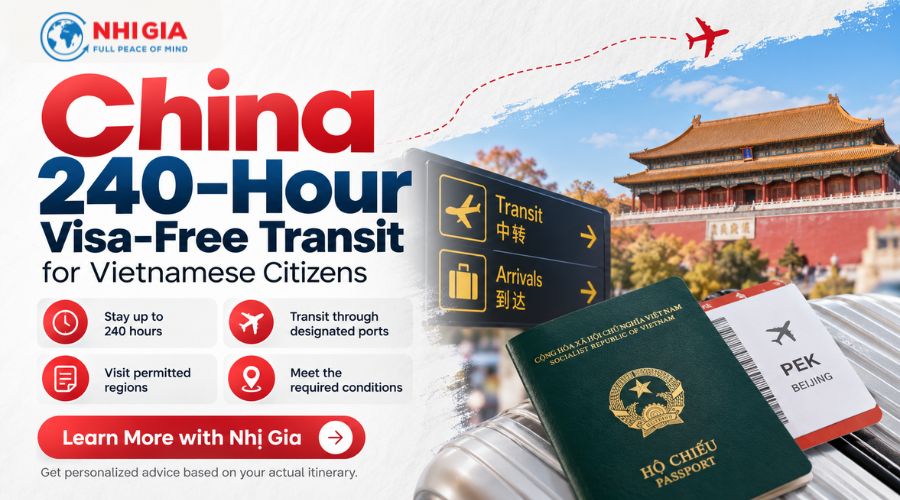
Since August 20, 2026, Vietnamese citizens holding ordinary passports may benefit from China’s 240-hour visa-free transit policy, equivalent to a maximum stay of 10 days. The policy facilitates short-term tourism, business activities, visits, and family visits during transit through China.
However, this is not a general visa exemption for entry into China. The policy applies only when travelers satisfy specific requirements concerning their passport, connecting ticket, onward destination, designated entry port, and permitted area of stay.
When did China’s 240-hour visa-free transit policy take effect?
According to Announcement No. 4 of 2026 issued by China’s National Immigration Administration, Vietnam and Kyrgyzstan were added to the list of countries eligible for China’s 240-hour visa-free transit policy from August 20, 2026.
Following this addition, the policy applies to nationals of 57 countries. Eligible travelers may enter China through 65 designated open ports of entry and exit across 24 provinces, autonomous regions, and municipalities directly under the Central Government, including major transportation hubs such as Beijing and Shanghai.
The maximum permitted stay is 240 hours, or 10 days, within the areas designated by the Chinese authorities. Travelers may not automatically travel throughout mainland China without geographical restrictions.

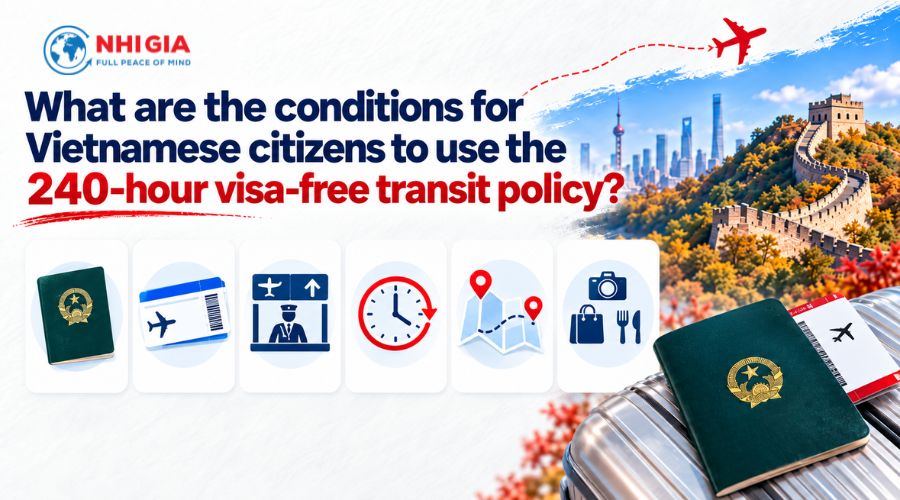
What are the conditions for Vietnamese citizens to use the 240-hour visa-free transit policy?
Vietnamese citizens must satisfy the following basic conditions to qualify for visa-free transit.
Holding a valid ordinary passport
The policy applies to travelers holding ordinary passports. The passport must be valid for use and satisfy the entry and exit inspection requirements applicable at the time of travel.
The official announcement does not state that the policy applies to every type of travel document. Therefore, travelers using diplomatic passports, official passports, laissez-passers, or other special travel documents should verify the applicable rules before departure.
Having an onward ticket to a third country or region
The traveler must hold an interline passenger ticket with a confirmed date and itinerary for onward travel to a third country or region.
In principle, China must be a transit point rather than the traveler’s final destination. For example, a route from Vietnam through Beijing and onward to Japan may correspond to the required transit structure. By contrast, a Vietnam–Beijing–Vietnam itinerary does not meet the requirement of onward travel to a third country or region under this policy.
The onward ticket should clearly show the subsequent flight information, departure date, and relevant itinerary. A round-trip ticket between Vietnam and China alone does not establish eligibility for the 240-hour visa-free transit policy.
Entering through a designated port
Eligible travelers may enter China through one of the 65 designated open ports. Not every international port of entry in China is automatically covered by this policy.
Before booking a ticket, travelers should verify the entry port, exit port, and permitted area of stay. Any inconsistency between the actual itinerary and the policy requirements may result in the traveler not being recognized as eligible for visa-free transit at the time of immigration inspection.
Staying within the permitted area
The maximum stay is 240 hours within the designated permitted areas. Travelers must comply with geographical restrictions and relevant residence registration or immigration control requirements.
Accordingly, visa-free transit does not mean that travelers may move freely throughout China. If the itinerary includes destinations outside the permitted area, the traveler should verify eligibility again or apply for the appropriate visa before departure.
If you are uncertain whether your itinerary qualifies for visa-free transit, contact Nhị Gia at 1900 6654 for assistance in reviewing your itinerary, passport type, and supporting documents. This review helps reduce the risk of missing or inconsistent information.
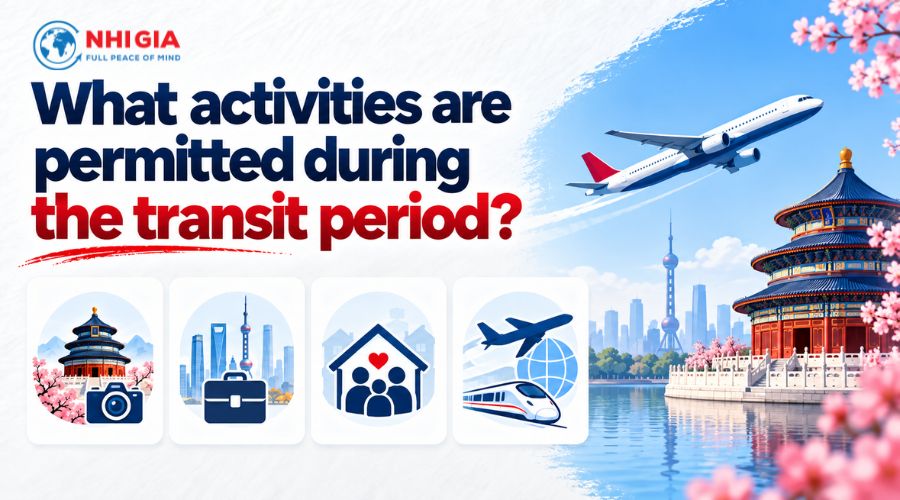
What activities are permitted during the transit period?
According to the policy interpretation published by China’s National Immigration Administration, travelers eligible for 240-hour visa-free transit may engage in certain short-term activities, including:
- Tourism.
- Business activities.
- Visits.
- Family visits.
The policy does not cover activities requiring prior approval, including employment, study, and journalistic reporting. Travelers intending to undertake these activities must obtain the appropriate visa before entering China.
Difference between 240-hour visa-free transit and 30-day visa-free entry into Hainan
On August 20, 2026, China also introduced a separate policy allowing Vietnamese citizens holding ordinary passports to enter Hainan Province without a visa for up to 30 days.
The two policies have different scopes:
| Criteria | 240-hour visa-free transit | 30-day visa-free entry into Hainan |
| Legal nature | Transit to a third country or region | Entry into Hainan Province |
| Maximum stay | Up to 240 hours, equivalent to 10 days | Up to 30 days |
| Permitted area | Designated areas in participating locations | The administrative area of Hainan Province |
| Itinerary requirement | An onward ticket to a third country or region is required | Not based on the 240-hour transit arrangement |
| Permitted activities | Tourism, business, visits, and family visits | Tourism, business, visits, and family visits |
| Activities excluded | Employment, study, and journalistic reporting | Employment, study, and journalistic reporting |
Visa-free entry into Hainan does not automatically permit travelers to move to other areas of mainland China. Travelers must comply with the territorial scope and specific conditions of the Hainan policy.
What should Vietnamese travelers prepare before departure?
Before traveling, travelers should review the following information:
- The ordinary passport remains valid for travel.
- The onward ticket to a third country or region has a confirmed date and itinerary.
- The entry port is included among the 65 designated ports.
- The intended place of stay is within the permitted area.
- The purpose of travel falls within the activities permitted under the visa-free policy.
- The requirements of the airline and immigration authorities remain satisfied at the time of departure.
Visa-free entry is assessed through immigration procedures at the port of entry. Therefore, merely holding a ticket that appears to meet the formal requirements does not replace the obligation to comply with all applicable entry conditions.
China’s 240-hour visa-free transit policy for Vietnamese citizens took effect on August 20, 2026. It applies to Vietnamese citizens holding ordinary passports who have a confirmed onward ticket to a third country or region and enter through a designated port.

This is a conditional transit exemption, not a general visa exemption for all trips to China. If the itinerary does not satisfy the requirements concerning the onward destination, entry port, permitted area, or purpose of travel, the traveler may still be required to obtain a visa before departure.
For assistance in reviewing eligibility and minimizing document-related risks, contact Nhị Gia at 1900 6654.
Official sources:
- Vietnam Government News: China introduces 240-hour visa-free transit for Vietnamese citizens
- China National Immigration Administration: Announcement No. 4 of 2026
- China National Immigration Administration: Visa-Free Transit Policies