A U.S. visa allows a foreign national to seek entry into the United States for a specific purpose, such as tourism, business, family visit, study, exchange, temporary work or permanent immigration. Depending on the purpose of travel, intended length of stay, applicant’s circumstances and sponsorship basis, the correct visa category should be identified before the application is prepared.
Choosing the correct visa category from the beginning is important. If the wrong visa type is selected, the application may not align with the actual purpose of travel, may require further clarification or may be refused because the applicant does not meet the requirements of the selected category.
This article provides an overview of common U.S. visa categories, including nonimmigrant and immigrant visas, to help applicants understand the available options at a preliminary level.
What is a U.S. visa?
A U.S. visa is a document issued by a U.S. consular authority that allows a foreign national to travel to a U.S. port of entry and request admission for the purpose stated in the visa application.
A visa does not automatically guarantee entry into the United States. At the port of entry, U.S. Customs and Border Protection determines whether the traveler may be admitted and how long the traveler may stay, depending on the case.
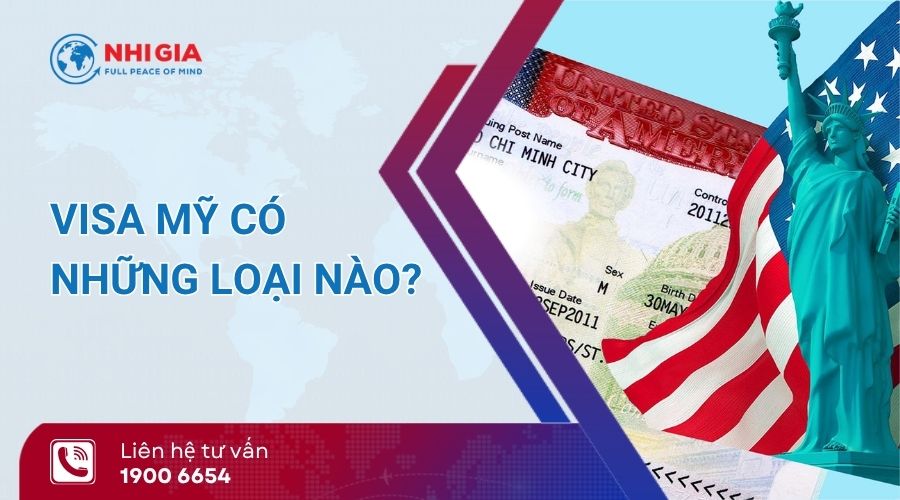
A U.S. visa is usually placed in the passport and shows information such as the holder’s name, passport number, visa category, number of entries, issue date, expiration date and any applicable annotations.
What are the main groups of U.S. visas?
U.S. visas are generally divided into two main groups:
- Nonimmigrant visas;
- Immigrant visas.
Nonimmigrant visas are for temporary travel to the United States for a specific purpose, such as tourism, business, study, exchange, transit or temporary work.
Immigrant visas are for applicants who intend to live permanently in the United States and may be processed toward lawful permanent residence if the application is approved and all requirements are met.
What is a U.S. nonimmigrant visa?
A U.S. nonimmigrant visa is for a foreign national who wishes to enter the United States temporarily and intends to leave after the permitted purpose of stay has been completed.
This group of visas is not intended for long-term permanent residence. The applicant should demonstrate a clear travel purpose, temporary stay plan, suitable financial capacity and eligibility for the selected visa category.
Common nonimmigrant visa categories include:
- B-1/B-2 business, tourism and family visit visas;
- F and M student visas;
- J exchange visitor visas;
- C transit visas;
- D crew member visas;
- H, L, O, P, Q, R and related temporary worker visas;
- E treaty trader and investor visas;
- I media visas;
- A, G and NATO diplomatic, official and international organization visas;
- Other special visa categories under U.S. law.
B-1/B-2 business, tourism and family visit visas
The B-1/B-2 visa is one of the most common nonimmigrant visa categories for Vietnamese applicants traveling to the United States for short-term purposes.
B-1 visa
The B-1 visa is generally for short-term business purposes, such as:
- Attending meetings, conferences or seminars;
- Meeting business partners;
- Negotiating contracts;
- Participating in permitted commercial activities;
- Conducting market research or attending professional events.
A B-1 visa holder is not permitted to engage in paid employment in the United States or activities inconsistent with the visa category.
B-2 visa
The B-2 visa is generally for:
- Tourism;
- Visiting family members or friends;
- Medical treatment;
- Attending family events;
- Participating in short-term social, recreational or community activities.
In many cases, the visa is issued as a combined B-1/B-2 visa, allowing the traveler to enter for a permitted business, tourism or family visit purpose depending on the trip.
F and M student visas
U.S. student visas are for foreign nationals who wish to study at an approved institution in the United States.
F-1 visa
The F-1 visa is for international students pursuing academic study in the United States, such as university, college, high school, English language programs or other eligible academic programs.
An F-1 applicant generally needs Form I-20 issued by the U.S. school, a clear study purpose, suitable financial capacity and a reasonable study plan.
F-2 visa
The F-2 visa is for the spouse and unmarried children under 21 of an F-1 visa holder, where they are eligible to accompany or join the principal applicant.
M-1 visa
The M-1 visa is for students pursuing vocational or non-academic study in the United States. It differs from F-1 because the study purpose is focused on vocational or practical training.
M-2 visa
The M-2 visa is for the spouse and dependent children of an M-1 visa holder, where eligibility requirements are met.
J exchange visitor visa
The J-1 visa is for participants in approved exchange programs in the United States. Depending on the program, J-1 may apply to:
- Exchange students;
- Interns;
- Trainees;
- Professors;
- Research scholars;
- Teachers;
- Physicians under eligible programs;
- Au pairs;
- Summer work travel participants;
- Other cultural, educational or professional exchange programs.
Dependents of J-1 visa holders may apply for J-2 visas if eligible. Some J visa holders may be subject to a requirement to return to their country of residence for a specific period before applying for certain other visas or immigration benefits.
C transit visa
The C visa is for foreign nationals transiting through the United States on the way to another country.
This category generally applies where the travel itinerary requires transit through the United States. The applicant should demonstrate onward travel to a third country and no purpose of stay in the United States beyond the permitted transit.
D crew member visa
The D visa is for crew members working on sea vessels or international airlines who need to enter the United States as part of their employment duties.
In some cases, crew members may need a combined C-1/D visa where both transit and crew duties are involved.
Temporary worker visas
Temporary worker visas are for foreign nationals coming to the United States to work for a limited period under an authorized category. Most temporary worker visa categories require an approved petition before the applicant applies for the visa at a U.S. consular post.
Common temporary worker visa categories include the following.
H visas
The H visa group covers certain temporary work, training and labor categories.
Common examples include:
- H-1B: specialty occupation workers;
- H-2A: temporary agricultural workers;
- H-2B: temporary non-agricultural workers;
- H-3: trainees under eligible training programs;
- H-4: dependents of certain H visa holders.
L visas
The L visa is for intracompany transferees within a qualifying corporate group. It commonly applies to managers, executives or employees with specialized knowledge transferred to a parent, branch, subsidiary or affiliate in the United States.
O visas
The O visa is for individuals with extraordinary ability or achievement in fields such as sciences, education, business, athletics, arts, motion picture or television, depending on the specific eligibility requirements.
P visas
The P visa is generally for athletes, artists, entertainers, performance groups or participants in certain performances, competitions or cultural exchange programs.
Q visas
The Q visa is for participants in international cultural exchange programs designed to share the history, culture and traditions of their home country in the United States.
R visas
The R visa is for religious workers coming to the United States temporarily to work for a qualifying religious organization.
E treaty trader and investor visas
The E visa category applies to nationals of countries that have qualifying treaties of commerce and navigation with the United States.
Common categories include:
- E-1: treaty traders;
- E-2: treaty investors;
- E-3: certain Australian professionals in specialty occupations.
Not all nationalities are eligible for E visas. Eligibility depends on nationality, the applicable treaty and the specific case.
I media visa
The I visa is for representatives of foreign media traveling to the United States to engage in permitted media, journalism or information-related activities.
This category may apply to journalists, reporters, film crews or qualifying media personnel, depending on the nature of the work in the United States.
Diplomatic, official and international organization visas
Certain U.S. visas are issued to individuals traveling to the United States for diplomatic, official or international organization-related duties, such as:
- A visas: diplomats and certain government officials on official duties;
- G visas: representatives and employees of international organizations;
- NATO visas: individuals related to NATO duties as prescribed.
These categories have their own eligibility requirements and are generally tied to official duties, sending authorities or relevant international organizations.
What is a U.S. immigrant visa?
A U.S. immigrant visa is for a foreign national who intends to live permanently in the United States. After the visa is approved and the applicant enters the United States, the applicant may be processed toward lawful permanent resident status depending on the visa category and applicable requirements.
Common immigrant visa groups include:
- Family-based immigrant visas;
- Employment-based immigrant visas;
- Investor immigrant visas;
- Diversity immigrant visas;
- Certain special immigrant visa categories.
Family-based immigrant visas
Family-based immigrant visas are common for applicants who have a qualifying family relationship with a U.S. citizen or lawful permanent resident.
Common categories include:
- IR-1/CR-1: spouse of a U.S. citizen;
- IR-2/CR-2: child of a U.S. citizen;
- IR-5: parent of a U.S. citizen who is at least 21 years old;
- F1: unmarried son or daughter aged 21 or older of a U.S. citizen;
- F2A: spouse and unmarried child under 21 of a lawful permanent resident;
- F2B: unmarried son or daughter aged 21 or older of a lawful permanent resident;
- F3: married son or daughter of a U.S. citizen;
- F4: brother or sister of a U.S. citizen who is at least 21 years old.
Depending on the category, the case may be subject to visa quotas, the Visa Bulletin and different waiting periods.
K-1 fiancé(e) visa
The K-1 visa is for the fiancé(e) of a U.S. citizen. It is a nonimmigrant visa, but it is connected to an intended immigration process after marriage.
A K-1 visa holder enters the United States to marry the U.S. citizen petitioner within 90 days of entry. After the marriage, the applicant may apply for adjustment of status in the United States if eligible.
The K-2 visa is for eligible children of a K-1 visa applicant.
Employment-based immigrant visas
Employment-based immigrant visas are for foreign nationals who qualify based on ability, experience, skills, job position or qualifying employment sponsorship.
Main groups include:
- EB-1: persons with extraordinary ability, outstanding professors or researchers, and certain multinational managers or executives;
- EB-2: persons with advanced degrees or exceptional ability;
- EB-3: skilled workers, professionals and certain other workers;
- EB-4: certain special immigrants;
- EB-5: immigrant investors meeting investment and job creation requirements.
Each EB category has its own requirements regarding ability, education, experience, labor certification, investment or other criteria.
EB-5 immigrant investor visa
The EB-5 visa is for foreign investors who meet the requirements for investment in a new commercial enterprise in the United States and create qualifying jobs as required by law.
This category involves strict requirements regarding investment funds, lawful source of funds, project structure, investment risk, job creation and immigration compliance. Applicants should seek careful advice before choosing the EB-5 route.
Basic process for applying for a U.S. visa
The application process depends on whether the visa is nonimmigrant or immigrant.
For U.S. nonimmigrant visas
The basic process generally includes:
- Identifying the correct visa category based on the purpose of travel;
- Completing the DS-160 online form;
- Paying the visa application fee as instructed;
- Scheduling a visa interview;
- Preparing supporting documents;
- Attending the interview at the U.S. Embassy or Consulate;
- Receiving the result and passport according to instructions if the visa is issued.
Some nonimmigrant categories, especially temporary worker visas, may require an approved USCIS petition before the applicant applies for the visa.
For U.S. immigrant visas
The basic process generally includes:
- The petitioner or relevant party files the appropriate petition or underlying application;
- USCIS or the relevant authority reviews the case;
- The case is transferred to the National Visa Center if consular processing applies;
- The applicant completes fees, forms, financial sponsorship and civil documents;
- An interview is scheduled when the case becomes eligible;
- The applicant completes the medical examination, prepares documents and attends the interview;
- If the visa is issued, the applicant completes the next steps before entering the United States.
Immigrant visa processing is usually more complex than nonimmigrant visa processing and timelines vary by category.
U.S. visa fees
U.S. visa fees depend on the visa category, case type and processing stage.
For nonimmigrant visas, the application fee is usually paid before scheduling the interview. Some categories may involve additional fees, such as SEVIS fees for certain student and exchange visitor cases or petition-related fees for certain employment categories.
For immigrant visas, the petitioner and applicant may incur several fees, including petition filing fees, NVC processing fees, Affidavit of Support fees, medical examination fees, police certificate fees, translation costs and the USCIS Immigrant Fee if applicable.
Fees may change according to official schedules. Applicants should check the official fee information at the time of application.
Key notes when choosing a U.S. visa category
When preparing a U.S. visa application, applicants should note the following:
- Identify the correct purpose of entry before choosing the visa category;
- Do not use a tourism or family visit visa for employment or long-term study;
- Do not use a nonimmigrant visa if the actual purpose is permanent immigration without a suitable pathway;
- Provide truthful, clear and consistent information;
- Prepare financial, employment, study or sponsorship documents suitable for the selected category;
- Check the specific requirements of the chosen visa type;
- Monitor appointment schedules, notifications and requests from the consular authority;
- Do not use false documents or inaccurate information;
- If the applicant has previous refusals, overstay history or complex immigration history, the case should be reviewed carefully before reapplying.
Choosing the correct visa category helps create a clearer application strategy and reduces the risk of applying under the wrong purpose.
Nhi Gia’s U.S. visa consulting service
There are many U.S. visa categories, each with its own requirements, documents, process and assessment criteria. For clients who are unsure which visa category is suitable or whose cases require careful review, consultation before application can help reduce errors and improve document preparation.
With experience in U.S. visa and international mobility documentation, Nhi Gia assists clients in reviewing their travel purpose, identifying the suitable visa category and preparing documents based on each specific case.
Nhi Gia supports clients with:
- Advising on U.S. visa categories suitable for the intended purpose of travel;
- Reviewing tourist, business and family visit visa applications;
- Advising on student, exchange, temporary worker or immigrant visa cases;
- Assisting with DS-160 completion based on information provided by the client;
- Guiding visa fee payment and interview appointment scheduling;
- Organizing supporting documents based on each case;
- Advising on U.S. visa interview preparation;
- Guiding family sponsorship, spouse, fiancé(e) or other immigrant visa documentation;
- Advising on next steps for cases with previous refusals or complex factors.
For consultation on U.S. visas or assistance in identifying the suitable visa category, please contact Nhi Gia for detailed support.